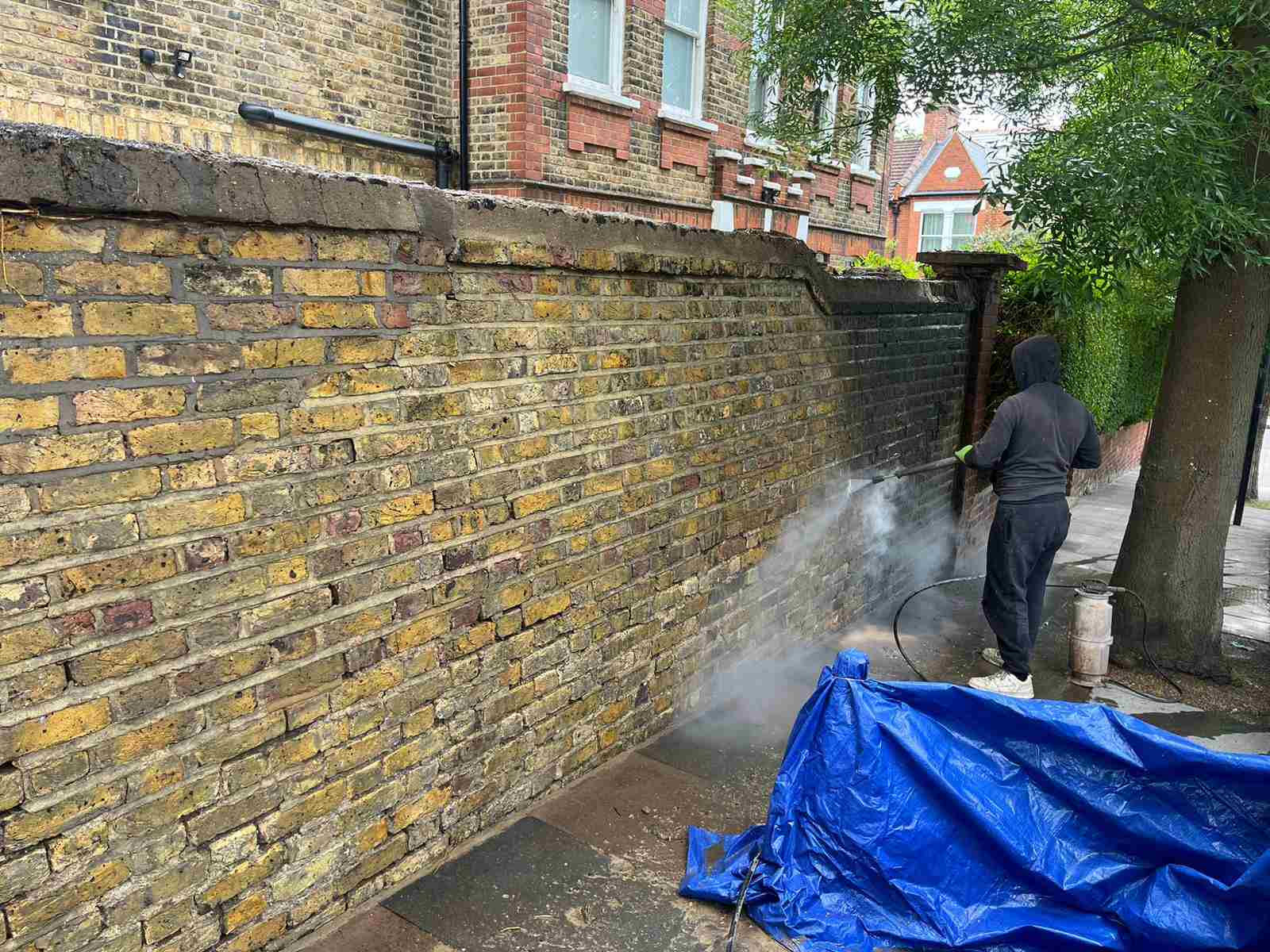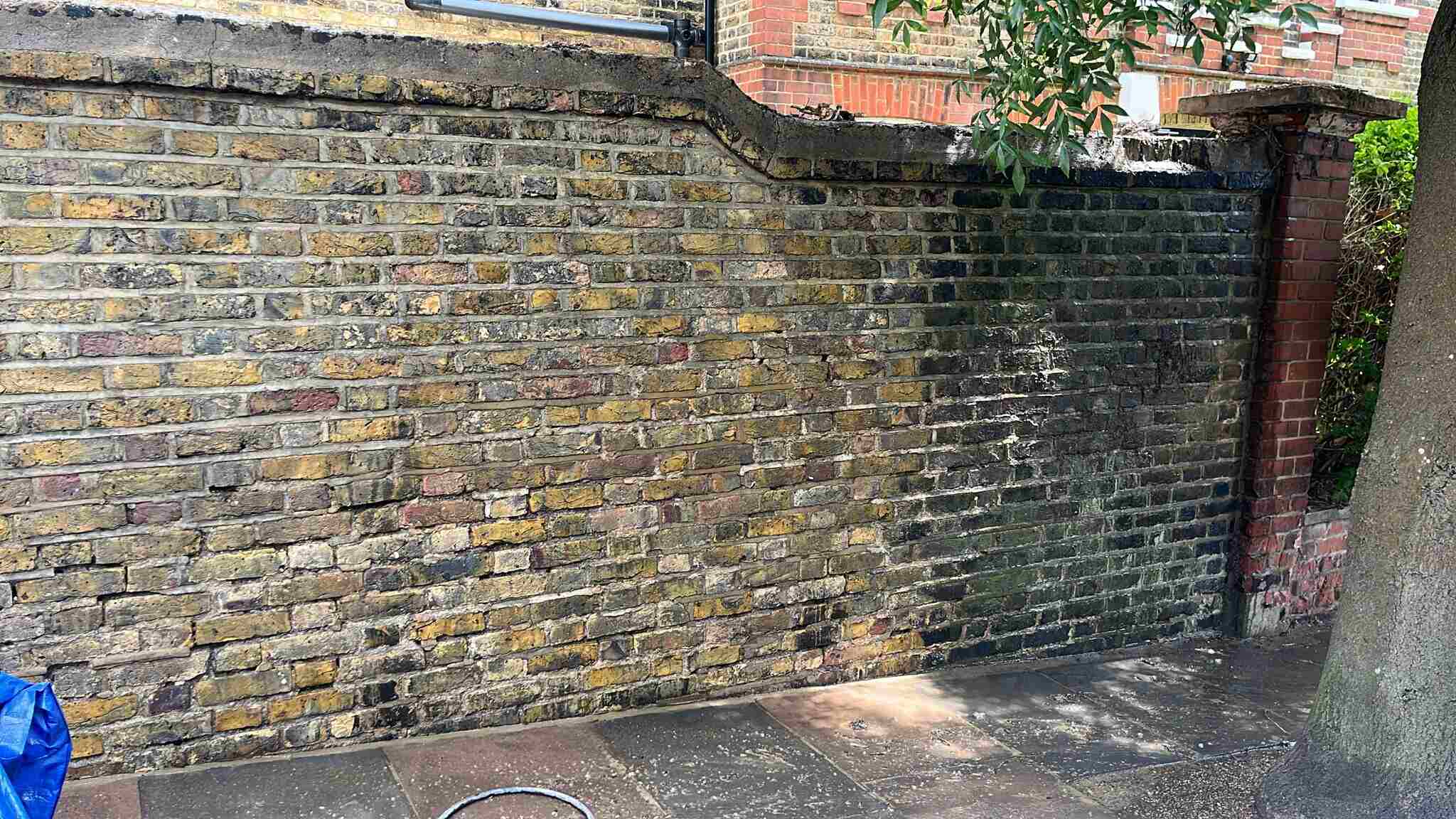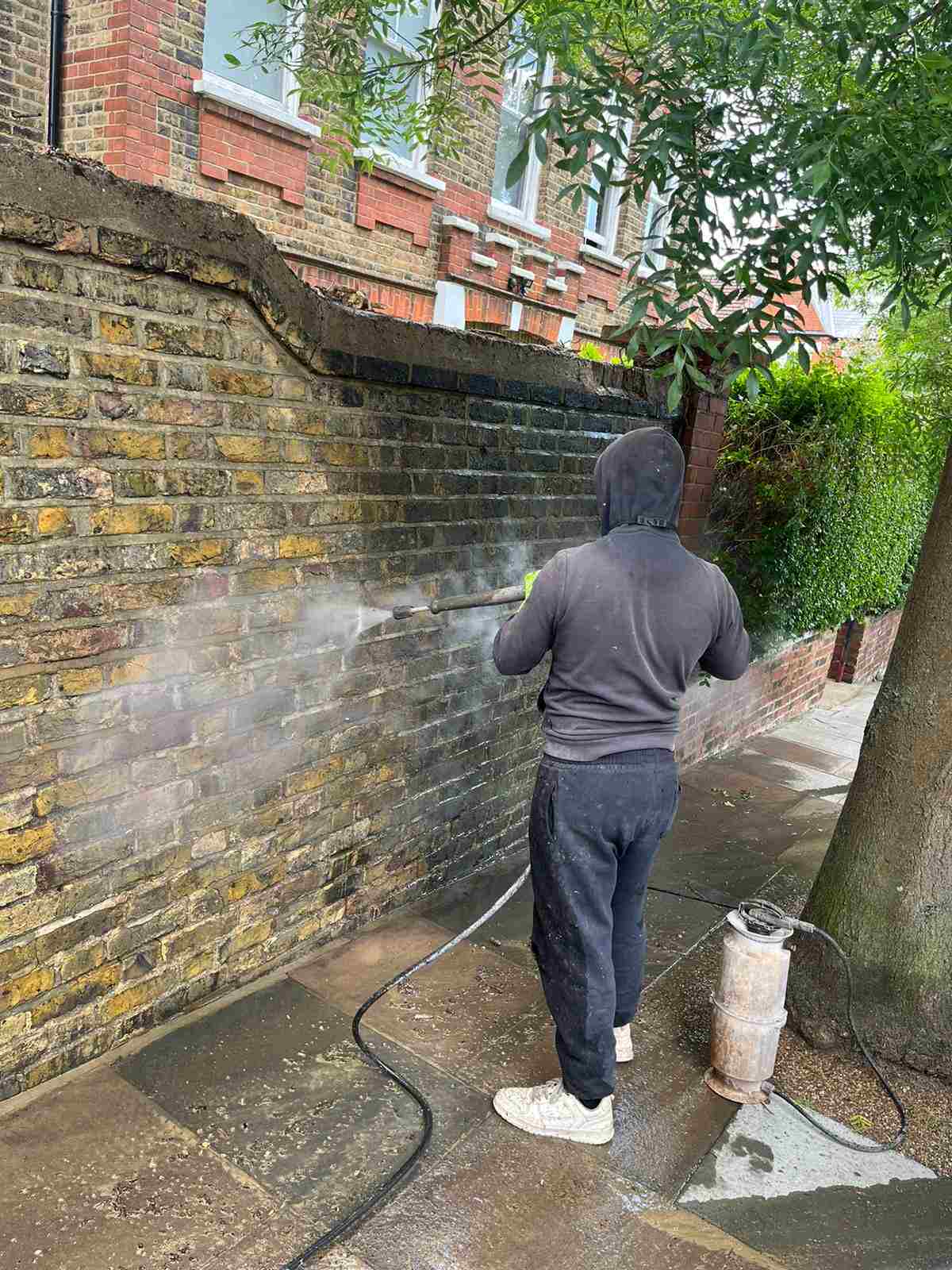
Removing pebble dash can completely transform the appearance of a property.
A house that has been covered for decades by a coarse grey, cream or painted exterior finish can potentially be restored to reveal attractive original brickwork underneath.
But homeowners considering pebble dash removal often have one important concern:
What will the bricks actually look like once the pebble dash comes off?
The answer is different for every property.
Some homes reveal remarkably well-preserved Victorian or Edwardian brickwork. Others uncover damaged bricks, hard cement residue, previous alterations, cracks or mortar joints that require substantial restoration.
That is why professional pebble dash removal before and after results should never be judged solely by how quickly the coating can be taken off.
The real work begins with protecting and restoring the masonry underneath.
At DW Brickwork Restoration, pebble dash removal is approached as part of a complete brickwork restoration process. The condition of the wall is assessed first, a test area is carried out where appropriate, and the exposed brickwork can then be cleaned, repaired and repointed where necessary.
Internal link: Link “professional pebble dash removal in London” to:
What Is Pebble Dash?
Pebble dash is an exterior finish created by applying a render or mortar base to a wall and throwing small stones or aggregate onto the wet surface.
The stones become embedded as the material cures.
Pebble dash became particularly common on British homes during the twentieth century because it provided a durable external finish and could conceal irregular or unattractive masonry.
It can be found on:
- Victorian houses altered later
- Edwardian properties
- 1920s and 1930s homes
- Terraced houses
- Semi-detached houses
- Extensions
- Boundary walls
- Commercial properties
In some cases, pebble dash is an original part of a property’s architectural character.
In others, it was added many years after construction and may be hiding attractive original brickwork.
Why Do Homeowners Remove Pebble Dash?
There are several reasons London property owners consider removal.
To Reveal Original Brickwork
This is often the main reason.
A Victorian or Edwardian house may have attractive London stock bricks or red bricks beneath a later coating.
Restoring those bricks can return much of the property’s original architectural character.
To Improve Kerb Appeal
Older or heavily painted pebble dash can make a property appear tired.
Exposed and professionally restored brickwork can create a dramatically different exterior appearance.
Because the Pebble Dash Is Failing
Over time, pebble dash can:
- Crack
- Become loose
- Flake
- Stain
- Separate from the substrate
- Develop patches
- Allow moisture behind defective sections
If large areas are failing, continued patch repairs may become unattractive or impractical.
To Investigate the Wall Underneath
A coating can hide the condition of the original masonry.
Removal may reveal whether the wall needs:
- Brick replacement
- Repointing
- Crack repair
- Cleaning
- Mortar repairs
- Previous alterations correcting
Pebble Dash Removal Before and After: What Should You Expect?
Before removal, the appearance of the underlying wall is usually uncertain.
Even experienced contractors cannot see every defect through a thick cement-based coating.
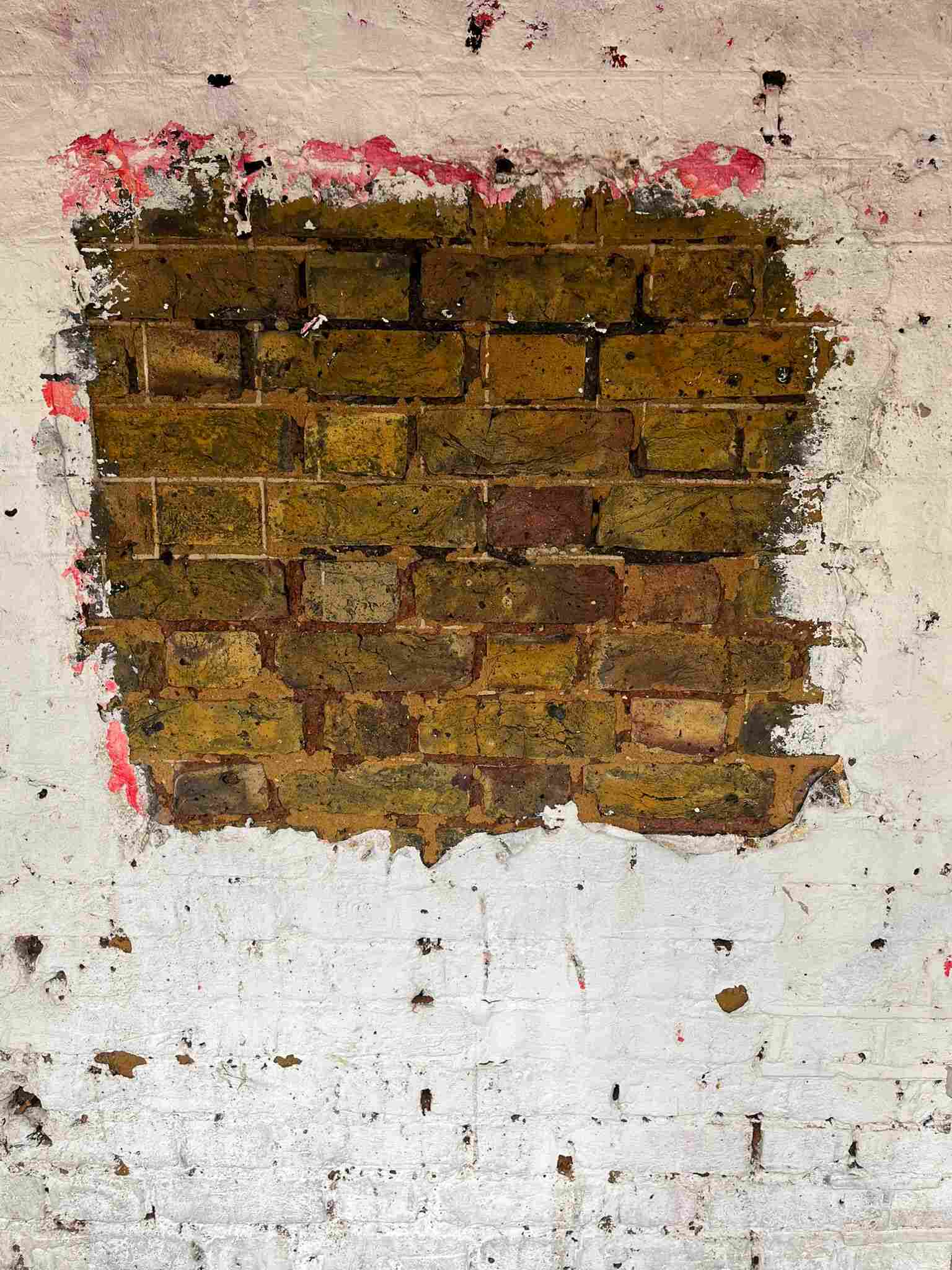
That is why a test patch can be extremely valuable.
A small section can reveal:
- Brick type
- Brick colour
- Condition of the brick faces
- Thickness of the coating
- Strength of adhesion
- Mortar condition
- Cement residue
- Previous damage
This gives both the homeowner and contractor a much clearer idea of the likely restoration work.
DW Brickwork Restoration’s existing London pebble-dash process begins with inspection and a test area before controlled removal, followed by cleaning, repairs and repointing where necessary.
What Can Be Hiding Under Pebble Dash?
There are several possible outcomes.
1. Well-Preserved Original Brickwork
This is the ideal result.
Sometimes pebble dash has effectively hidden the original façade for decades, leaving attractive brickwork underneath.
Once the coating and residue are removed, the wall may only require:
- Specialist brick cleaning
- Minor repairs
- Localised repointing
The finished transformation can be dramatic.
2. Brickwork Covered in Cement Residue
Pebble dash is usually bonded to a render or cementitious base.
Removing the main coating does not necessarily leave perfectly clean bricks.
Small areas of:
- Cement
- Render
- Adhesive material
- Surface residue
may remain attached.
These need to be removed carefully.
Aggressive cleaning can cause more damage than the original coating.
Traditional London stock bricks and other soft historic bricks require particular care because excessive abrasive treatment can remove the protective brick face.
3. Damaged Brick Faces
Some brick damage may occur because of:
- Age
- Frost
- Moisture
- Earlier repairs
- Original pebble-dash application
- Previous removal attempts
You may find:
- Spalled bricks
- Cracked bricks
- Chipped edges
- Pitted surfaces
- Missing brick faces
Not every damaged brick needs replacement.
A specialist should decide whether the brick can remain, be repaired or needs replacing.
4. Poor or Missing Mortar
Mortar joints hidden beneath pebble dash may have deteriorated over many years.
Once exposed, you may discover:
- Deeply recessed joints
- Crumbling mortar
- Missing joints
- Cracks
- Hard cement repairs
- Different generations of pointing
This is why pebble dash removal and repointing often form part of the same restoration project.
5. Different Types or Colours of Brick
Do not assume the entire façade underneath will be perfectly uniform.
Previous owners may have:
- Rebuilt openings
- Replaced windows
- Added extensions
- Removed doors
- Repaired structural damage
- Replaced individual bricks
Pebble dash may have originally been applied partly to disguise these differences.
When removed, several brick colours or patterns can become visible.
A skilled restoration contractor may be able to improve the appearance through careful brick matching, cleaning and repairs.
6. Historic Alterations
Removing a coating can reveal the history of a property.
You may discover:
- Former door openings
- Old window positions
- Blocked vents
- Extensions
- Different brick bonds
- Previous repairs
- Decorative brick details
Some homeowners choose to preserve these signs of the building’s development.
Others prefer restoration that makes previous alterations less obvious.
7. Brickwork That Cannot Sensibly Be Left Exposed
This possibility needs to be discussed honestly.
Not every pebble-dashed house contains attractive, salvageable facing brick underneath.
The original wall may consist of:
- Low-grade bricks
- Heavily damaged bricks
- Extensive patchwork
- Blockwork
- Masonry intended to receive render
- Previously damaged surfaces
In those circumstances, removing pebble dash and insisting on a bare-brick finish may not provide the best result.
Alternative finishes may need to be considered.
Why Is a Test Patch So Important?
A test area reduces uncertainty.
Instead of removing an entire façade and discovering unexpected problems afterwards, a carefully chosen small section can show how the coating behaves.
A test patch can help answer:
How strongly is the pebble dash bonded?
Some coatings separate relatively easily.
Others are extremely hard and strongly bonded.
What condition are the bricks in?
The test can show whether the brick faces remain intact.
Is there thick cement behind the pebble dash?
Sometimes the visible aggregate layer is only part of the problem.
Will significant brick repair be needed?
Damage becomes easier to estimate once the underlying masonry can be inspected.
Is exposed brick a realistic final finish?
This is one of the most important questions.
A successful test patch helps set realistic expectations before the full project begins.
How Is Pebble Dash Professionally Removed?
Removal should be controlled rather than aggressive.
A typical restoration process may involve the following steps.
Step 1: Survey the Property
The contractor assesses:
- Coating condition
- Property age
- Brick type
- Access
- Cracks
- Damp staining
- Previous repairs
- Architectural details
Step 2: Carry Out a Test Area
A discreet area is opened to inspect the wall underneath.
This helps determine how difficult removal will be and what restoration may follow.
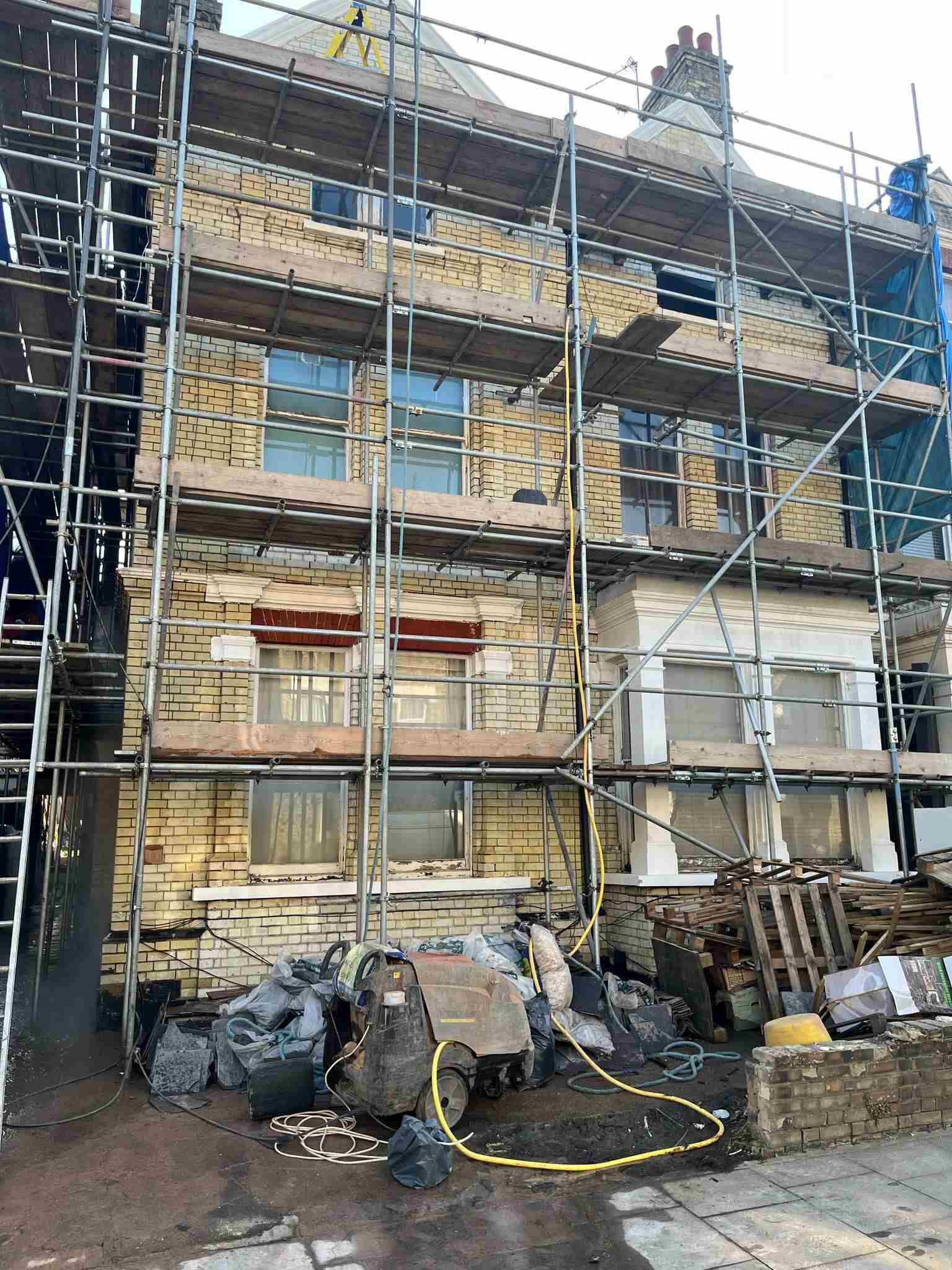
Step 3: Protect the Property
Areas requiring protection may include:
- Windows
- Doors
- Roof coverings
- Paths
- Neighbouring property
- Garden features
- Drainage
Scaffolding may be required for larger façades.
Step 4: Controlled Removal
The pebble dash and backing coat are gradually removed using suitable tools.
The priority is to separate the coating while avoiding unnecessary damage to the brick underneath.
Trying to complete the process too quickly can chip or break bricks.
Step 5: Remove Remaining Residue
Once the bulk material is removed, cement or render residue may still remain.
This stage can require considerably more care than homeowners expect.
The cleaning technique needs to suit the brick.
Step 6: Clean the Brickwork
Once exposed, the bricks may be covered with:
- Cement residue
- Dust
- Pollution
- Organic growth
- Historical staining
Suitable controlled cleaning can help reveal the natural brick colour.
Step 7: Repair Damaged Bricks
Individual bricks may need:
- Careful repair
- Surface consolidation where appropriate
- Cutting out
- Replacement with matching bricks
Brick matching is especially important on period London houses where inappropriate replacement bricks can stand out significantly.
Step 8: Repoint the Mortar Joints
Once the wall is clean and repaired, deteriorated mortar can be replaced.
For older properties, an appropriate lime-based mortar may be required.
The mortar should be compatible with both the bricks and the original construction.
Step 9: Final Restoration
The completed façade should be inspected as a whole.
The objective is not necessarily to make historic brickwork look brand new.
Good restoration should preserve natural:
- Colour variation
- Texture
- Age
- Character
- Traditional detailing
Can Removing Pebble Dash Damage Bricks?
Yes, if the work is carried out aggressively.
Pebble dash can bond strongly to the underlying surface.
Trying to remove it too quickly can:
- Break brick faces
- Chip corners
- Damage mortar
- Crack bricks
- Create gouges
- Increase the amount of restoration required
The Federation of Master Builders advises that removal is skilled work and notes that DIY hammer-and-chisel removal can result in broken brickwork or more serious damage.
This is one of the main reasons a controlled removal method and test area are recommended.
Should Pebble Dash Be Sandblasted Off?
Aggressive traditional sandblasting is generally not the first choice for soft historic brickwork.
Once the pebble dash has been removed, stubborn cement residue may remain.
However, overly aggressive abrasive cleaning can damage:
- London stock bricks
- Soft clay bricks
- Mortar joints
- Decorative details
The Federation of Master Builders similarly notes that aggressive sandblasting can erode softer brickwork and open mortar joints.
Where specialist abrasive cleaning is considered, the system, medium and pressure should be carefully controlled and tested first.
Does Brickwork Need Repointing After Pebble Dash Removal?
Quite often—but not automatically.
Once the coating is removed, mortar joints may be:
- Sound
- Partially deteriorated
- Completely deteriorated
- Previously repaired with hard cement
Sound mortar should not be removed unnecessarily.
Where joints have failed, repointing helps complete the restoration and protect the exposed wall.
For traditional London properties, the correct mortar specification is particularly important.
Can London Stock Bricks Be Restored After Pebble Dash Removal?
Often, yes.
London stock brick is one of the most recognisable materials in the capital.
Its natural colour can range through:
- Yellow
- Buff
- Brown
- Orange
- Darker fired tones
When a London stock façade has spent decades beneath pebble dash, removal followed by careful cleaning and repointing can reveal considerable original character.
However, these bricks can be relatively soft.
Aggressive cleaning should therefore be avoided.
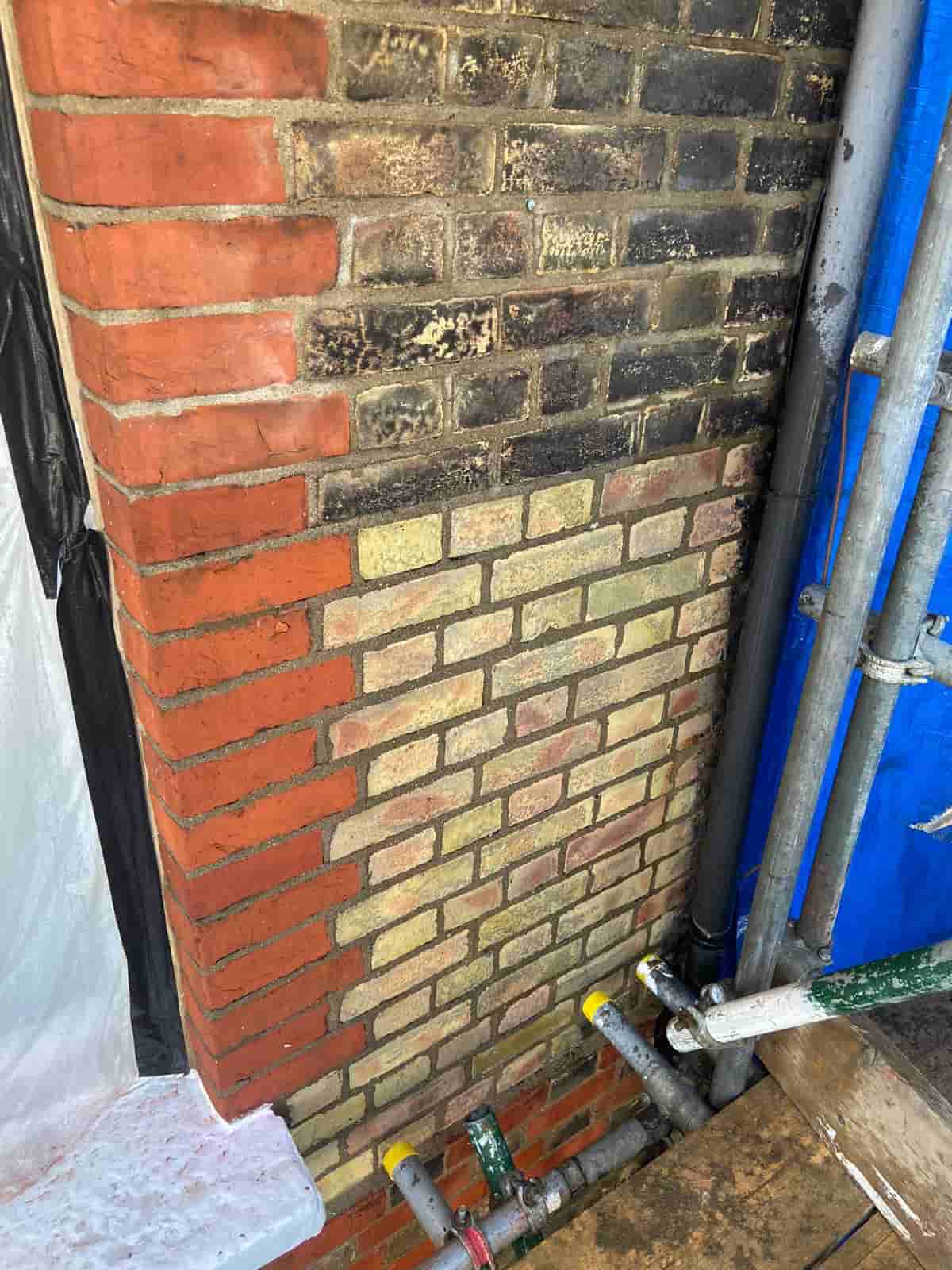
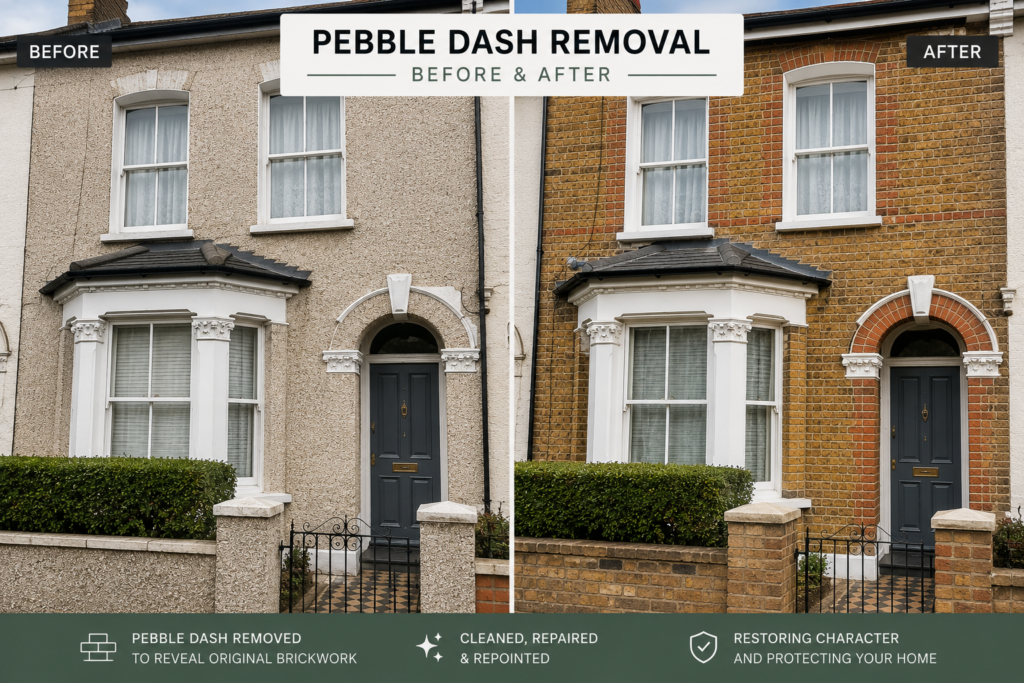
What Does a Good Before-and-After Result Look Like?
A good restoration should not look artificial.
Before:
- Cracked or dated pebble dash
- Painted exterior
- Uneven patches
- Hidden architectural detail
During:
- Exposed cement backing
- Dust
- Brick repairs
- Open mortar joints
- Test areas
After:
- Original bricks visible
- Cement residue removed
- Damaged bricks repaired
- Mortar professionally repointed
- Natural brick variation preserved
- Period character restored
The biggest mistake with before-and-after photography is making the finished wall look unrealistically perfect.
Historic brickwork naturally contains variations.
That is part of its character.
Will All the Bricks Match After Removal?
Not necessarily.
A façade may contain repairs from different periods.
You may find:
- Original bricks
- Replacement bricks
- Areas of rebuilding
- Former openings
- Different batches of bricks
Where replacements are necessary, an experienced restoration company should aim to match:
- Size
- Colour
- Texture
- Age
- Weathering
- Brick type
Perfect matching is not always possible, particularly with historic materials, but sympathetic restoration can substantially improve consistency.
Should You Seal Brickwork After Pebble Dash Removal?
Not automatically.
There is a common assumption that exposed bricks should immediately be coated with a clear waterproof sealer.
That is not always appropriate, particularly on traditional masonry.
Any protective treatment should be selected according to:
- Brick porosity
- Wall construction
- Moisture condition
- Existing mortar
- Exposure
Using an unsuitable coating may interfere with the wall’s moisture behaviour.
In many situations, correctly repaired bricks and compatible mortar may be more important than applying a surface coating.
Can Removing Pebble Dash Help With Damp?
It depends on the cause of the damp.
Defective dense render can sometimes contribute to moisture problems, particularly where cracks allow water behind the coating or where traditional masonry cannot dry effectively.
However, damp can also result from:
- Roof defects
- Gutters
- Leaking pipes
- High ground levels
- Flashing
- Drainage
- Condensation
Removing pebble dash should therefore not be sold as a guaranteed damp cure.
The building should be assessed as a whole.
Should You Remove Pebble Dash or Render Over It?
Both options can be appropriate in different circumstances.
Removing Pebble Dash May Be Better If:
- Attractive original brickwork lies underneath
- The coating is badly cracked
- Large areas are loose
- Period character is important
- You want an exposed brick finish
- Extensive masonry inspection is needed
Rendering Over May Be Considered If:
- The existing coating is structurally sound
- The masonry underneath is unsuitable for exposure
- A smooth rendered finish is preferred
- The proposed system is compatible with the wall
The existing wall should be professionally assessed before adding more material over old pebble dash.
Is Pebble Dash Original to Some Period Properties?
Yes.
Pebble dash itself has architectural history and should not automatically be treated as an undesirable modern alteration.
It became associated with Arts and Crafts architecture and was widely used on twentieth-century British homes.
Where pebble dash is an original feature of a historically significant building, removing it may not necessarily be the best conservation choice.
For listed buildings or properties in conservation areas, owners should check relevant planning or conservation requirements before materially altering the façade.
How Much Does Pebble Dash Removal Cost?
The cost depends heavily on:
- Property size
- Coating thickness
- Access
- Scaffolding
- Strength of adhesion
- Amount of brick damage
- Cleaning required
- Brick replacement
- Repointing
- Desired final finish
DW Brickwork Restoration already has an existing Pebble Dash Removal London page ranking for cost-related searches.
For SEO purposes, we should keep this article focused on before-and-after transformation and restoration, rather than competing with that page for the main cost cluster.
Pebble Dash Removal on Victorian Houses
Victorian properties are particularly strong candidates for careful assessment because later pebble dash may be hiding valuable original brickwork.
Possible discoveries include:
- London stock bricks
- Red brick arches
- Decorative bands
- Original window details
- Historic pointing
- Previous structural alterations
Successful restoration can return much of the façade’s original visual character.
However, soft Victorian brickwork requires patient removal.
Pebble Dash Removal on Edwardian Houses
Edwardian houses often contain decorative masonry and mixed materials.
Exposing the original façade may reveal:
- Red bricks
- Decorative string courses
- Stone detailing
- Arches
- Original mortar
Again, test patches are highly recommended before committing to a bare-brick finish.
Pebble Dash Removal Across London
DW Brickwork Restoration provides pebble dash removal throughout:
- Central London
- North London
- South London
- East London
- West London
Your existing area pages already follow an appropriate restoration sequence of inspection, controlled removal, cleaning, repairs and repointing.
Why Choose DW Brickwork Restoration?
Pebble dash removal should be approached as a masonry restoration project rather than simply a demolition job.
DW Brickwork Restoration provides:
- Initial brickwork assessment
- Test patches
- Controlled pebble dash removal
- Brick cleaning
- Brick replacement
- Brick restoration
- Lime mortar repointing
- Traditional pointing
- Render removal
- Paint removal
This allows the condition of the exposed façade to be addressed as part of one restoration strategy.
Get a Pebble Dash Removal Quote in London
If you are considering removing pebble dash from your property, the best first step is to determine what lies underneath.
A test area and professional inspection can help establish whether your original brickwork is suitable for restoration.
Reveal the Original Character of Your Property
Contact DW Brickwork Restoration for professional pebble dash removal and brick restoration across London.
Call: 07400 421 172
Email: info@dwbrickworkrestoration.co.uk
Request a free, no-obligation assessment and quotation.