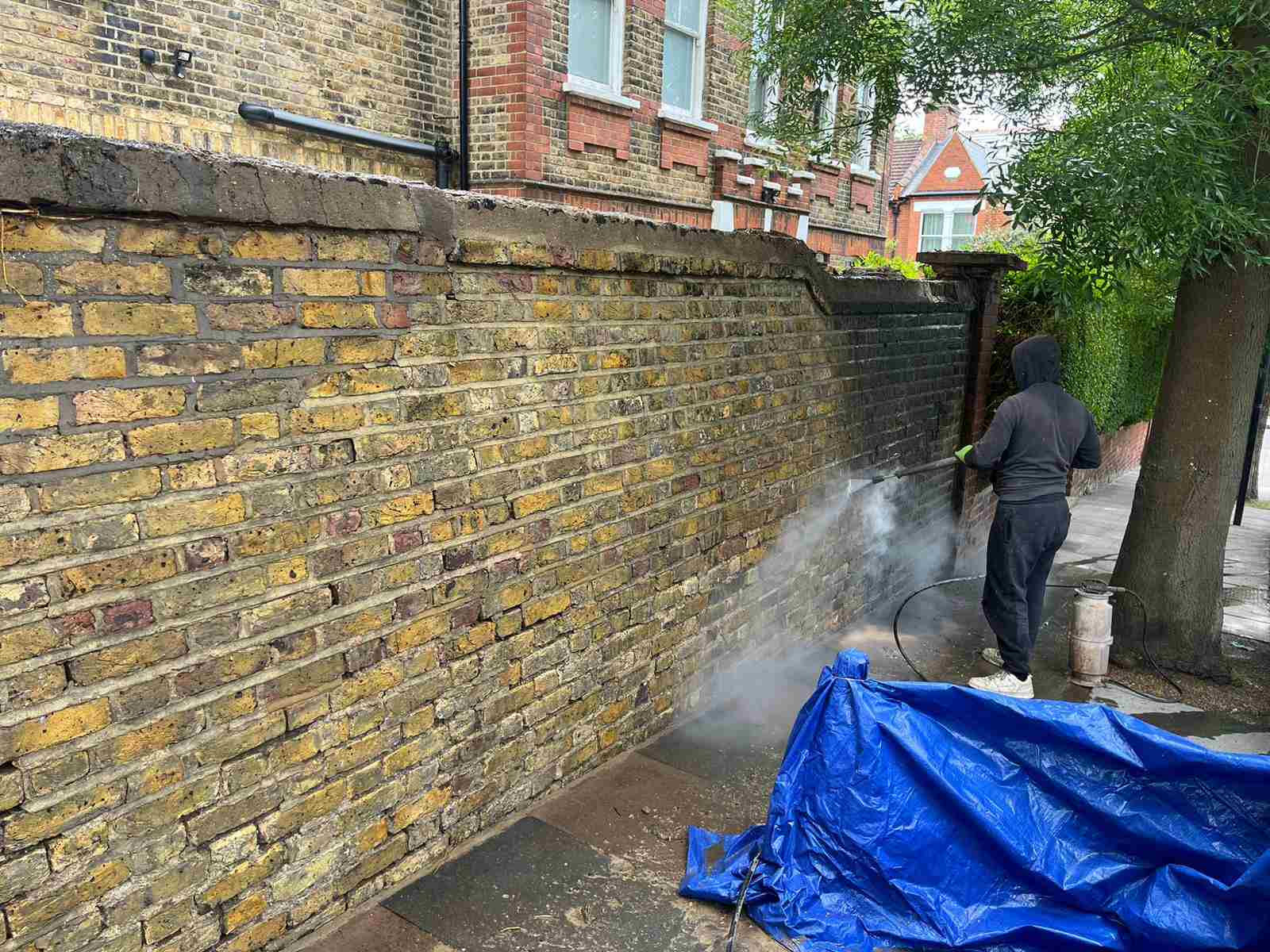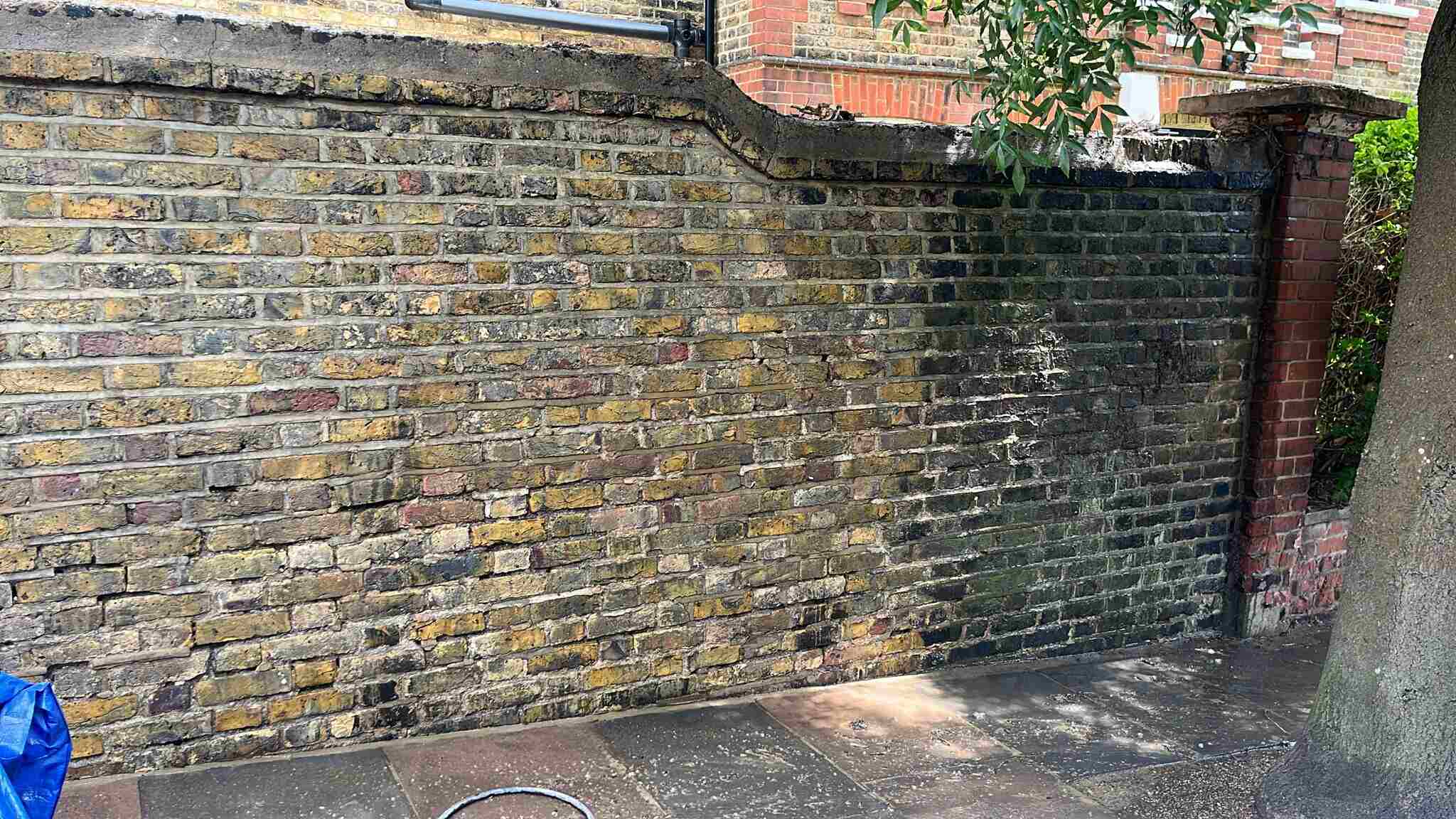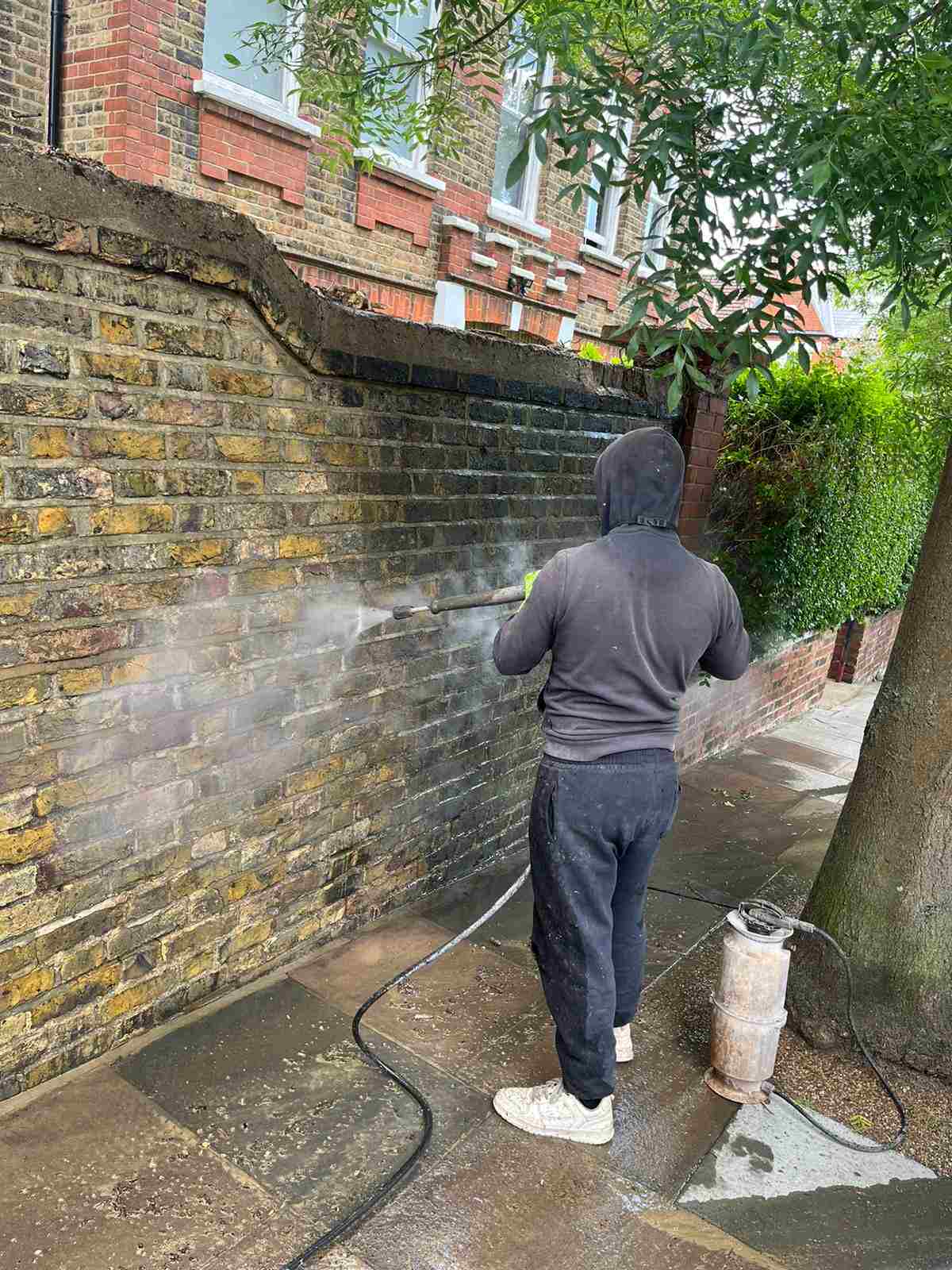
London brickwork can accumulate decades of soot, traffic pollution, algae, moss, atmospheric staining and general grime. Professional brick cleaning can dramatically improve its appearance, but homeowners naturally want to know one thing before arranging the work:
How much does brick cleaning cost in London?
As a general 2026 UK guide, professional brick cleaning typically costs around £10–£50 per m², with an average of approximately £30 per m². An average UK property may cost roughly £500–£695 to clean, although London prices can be higher because of labour costs, access, scaffolding and the complexity of working on period properties.
These figures are industry guide prices rather than fixed DW Brickwork Restoration rates. Every London property is different, so an inspection is the best way to establish an accurate quotation.
At DW Brickwork Restoration, we assess the age, condition and type of brickwork before deciding which cleaning technique is suitable.
Whether you own a Victorian terrace, Georgian townhouse, commercial façade or modern brick property, the objective should always be to achieve the cleanest possible result without unnecessarily damaging the brick or mortar.
How Much Does Brick Cleaning Cost in London in 2026?
Professional brick cleaning is usually priced according to the area being cleaned, the cleaning method required and the condition of the masonry.
As a broad guide:
| Brick Cleaning Work | Typical 2026 Guide |
| Brick cleaning per m² | £10–£50 |
| Average brick cleaning rate | Around £30 per m² |
| Average UK property | Around £500–£695 |
| Heavily stained or specialist work | Quoted individually |
| Scaffolding/access equipment | Additional where required |
| Repointing or brick repair | Additional if required |
| Paint/coating removal | Usually priced separately |
These figures should only be used for initial budgeting.
A straightforward modern brick wall at ground level may cost considerably less to clean than a three-storey Victorian façade with fragile bricks, deteriorating mortar, heavy pollution staining and restricted access.
London properties frequently require a more careful restoration approach, particularly when dealing with original period brickwork.
Internal link: Link “professional brick cleaning in London” to the main Brick Cleaning London commercial page.
Brick Cleaning Cost Per m²
One of the most common ways to estimate the cost is by square metre.
For example, using an illustrative rate of £30 per m²:
20m² × £30 = £600
A 20m² wall could therefore theoretically cost around £600.
However, this should not be treated as an actual quotation.
The price can change depending on:
- Type of brick
- Age of the building
- Amount of dirt or pollution
- Cleaning system required
- Height of the building
- Scaffolding
- Water and power access
- Existing mortar condition
- Paint or coatings
- Biological growth
- Specialist stain removal
- Nearby windows and architectural features
- Conservation requirements
A professional survey provides a much better indication of the real project cost.
Why Can Brick Cleaning Cost More in London?
Brick cleaning prices vary throughout the UK, and London projects often sit toward the higher end of typical market rates.
There are several reasons.
Higher Labour Costs
Operating costs and skilled labour rates are generally higher in London than in many other parts of the country.
Specialist restoration work can also require experienced technicians rather than general exterior cleaners.
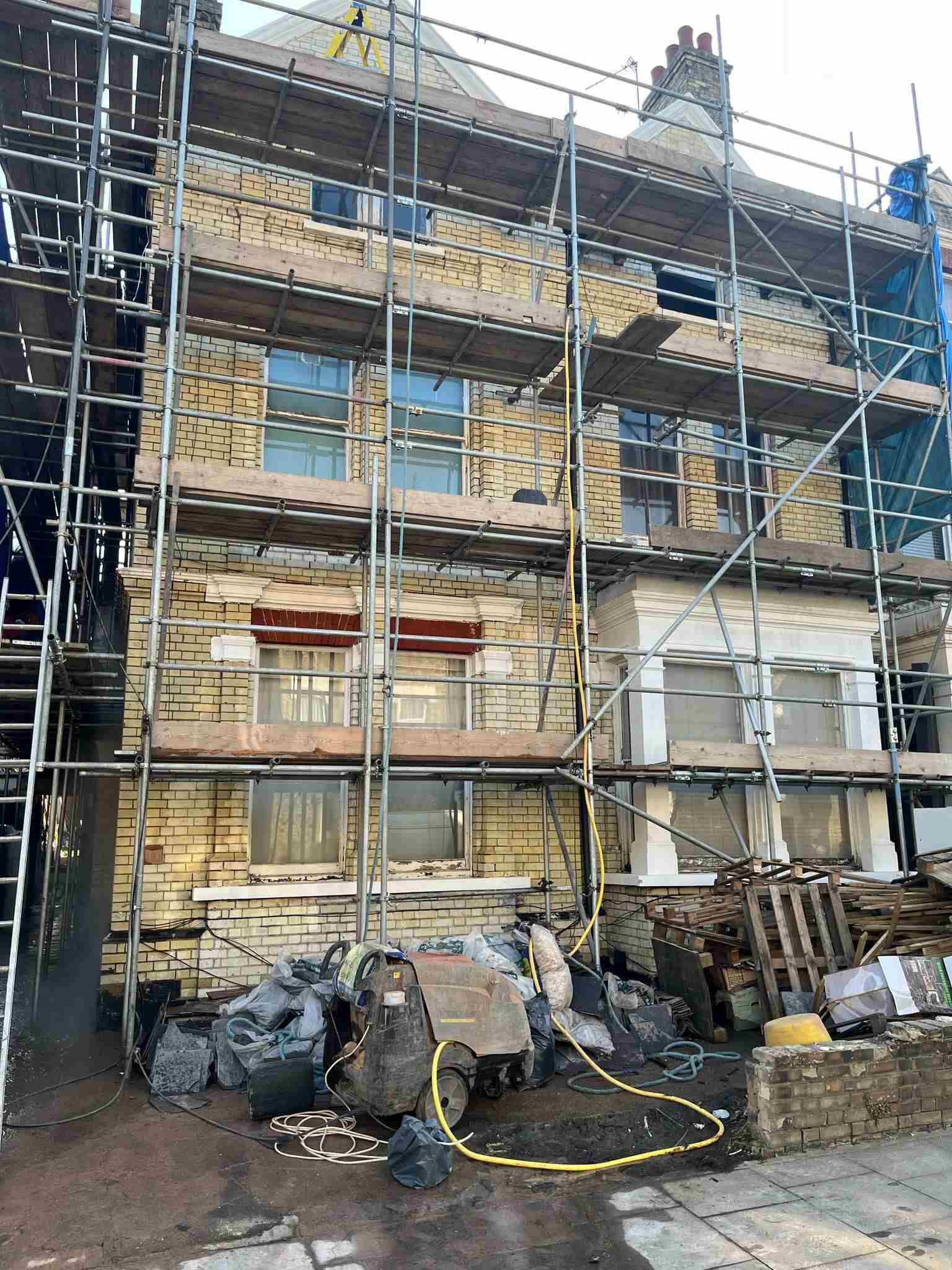
Scaffolding and Access
Many London properties are:
- Multi-storey
- Terraced
- Closely positioned beside neighbouring buildings
- Located on busy roads
- Surrounded by extensions
- Difficult to access from rear gardens
- Restricted by pavements or public spaces
If scaffolding, towers or specialist access equipment are needed, this can increase the overall project cost.
Older Brickwork
London contains a large number of Georgian, Victorian and Edwardian properties.
Older bricks may be softer and more porous than modern masonry.
Using aggressive cleaning methods simply because they work quickly can damage the face of historic bricks or weaken mortar joints.
Cleaning period brickwork therefore often requires more time, testing and care.
Pollution and Soot
Buildings beside busy roads can suffer from significant atmospheric pollution.
Over time, soot and carbon deposits can become deeply embedded into porous masonry.
Removing decades of London pollution is very different from removing light surface dirt from a recently constructed wall.
What Affects Brick Cleaning Prices?
Several factors determine the final cost of professional brick cleaning.
1. Size of the Area
The larger the façade, the greater the overall project cost.
However, larger projects may sometimes have a lower average rate per square metre because setup and equipment costs are spread across a larger surface.
2. Condition of the Brickwork
Light dust and algae are usually easier to remove than decades of:
- Black pollution staining
- Carbon deposits
- Paint residue
- Cement staining
- Efflorescence
- Rust
- Mortar smears
- Biological growth
- Previous coatings
The condition of the surface should always be evaluated before cleaning starts.
3. Type and Age of Brick
Different bricks respond differently to cleaning.
Modern engineering bricks, traditional London stock bricks, handmade bricks and softer historic masonry should not automatically be treated using the same method.
A test area can help determine:
- Appropriate temperature
- Pressure
- Chemical strength
- Contact time
- Cleaning method
- Expected finish
This is especially important with period properties.
4. Cleaning Method Required
Different contamination requires different cleaning techniques.
At DW Brickwork Restoration, the cleaning method should be selected according to the brick, mortar and substance being removed rather than using one process for every property.
DOFF Steam Cleaning
DOFF-style superheated steam cleaning can be suitable for sensitive masonry and heritage surfaces.
It uses high-temperature water vapour with relatively low pressure to help remove substances such as:
- Dirt
- Moss
- Algae
- Organic growth
- Atmospheric grime
- Some coatings and residues
It can be particularly useful where aggressive pressure cleaning would be inappropriate.
Soft Washing
Soft washing combines lower pressure with appropriate cleaning products to break down organic growth and staining.
It can be suitable for surfaces where excessive pressure should be avoided.
Specialist Chemical Cleaning
Certain stains or coatings may require carefully selected masonry-cleaning products.
The product must be compatible with the masonry because inappropriate chemicals can:
- Discolour bricks
- Damage mortar
- Leave residues
- Cause staining
- Affect nearby materials
Professional application and thorough rinsing are important.
Low-Pressure Cleaning
Strong, modern brickwork may sometimes be cleaned with controlled low-pressure water.
This should not be confused with indiscriminate high-pressure washing.
Pressure that is too aggressive can damage the face of bricks and erode mortar joints.
TORC Cleaning
TORC cleaning uses a controlled swirling mixture of air, water and fine granulate to remove more persistent deposits.
It is often associated with specialist restoration projects where more delicate control is required.
The appropriate method depends on the substrate and contamination.
Can Pressure Washing Damage Brickwork?
Yes, if inappropriate pressure is used.
A powerful pressure washer may make dirty brickwork appear clean quickly, but it can also damage:
- Brick faces
- Mortar joints
- Soft historic masonry
- Decorative details
- Previously repaired areas
Once the protective face of an old brick has been damaged, the masonry may become more vulnerable to moisture and frost.
For this reason, professional brick cleaning should begin with an assessment of the surface.
The objective is not simply to make the bricks look brighter.
It is to clean them without shortening their lifespan.
Brick Cleaning Victorian Houses in London
Victorian brickwork is one of London’s most recognisable architectural features.
Traditional London stock bricks naturally develop variations in colour and texture, so the goal should not normally be to make them look artificially new.
Professional restoration aims to remove unwanted contamination while preserving the character of the original masonry.
Before cleaning a Victorian façade, specialists should assess:
- Brick hardness
- Mortar condition
- Previous repairs
- Surface coatings
- Pollution levels
- Damp staining
- Efflorescence
- Cracked bricks
- Areas of spalling
The correct approach may then combine cleaning with repointing or individual brick repairs.
Internal link: Link “Victorian brick restoration” to the relevant Brick Restoration service page.
Should Brickwork Be Repointed Before or After Cleaning?
This depends on the condition of the wall.
Cleaning can sometimes expose deteriorated mortar joints that were difficult to see beneath heavy dirt and pollution.
In other cases, badly deteriorated joints need to be addressed before extensive cleaning so that excessive water does not penetrate vulnerable areas.
A professional contractor should inspect both the brick and mortar and determine the appropriate sequence.
Where necessary, a project can involve:
- Initial inspection
- Test cleaning
- Removal of loose material
- Brick cleaning
- Brick repairs
- Repointing
- Final finishing and inspection
Internal link: Link “repointing” to your Repointing Services London page and Blog #1, Repointing Cost London 2026.
Does Brick Cleaning Include Paint Removal?
Usually not.
Removing normal dirt and pollution is different from removing masonry paint.
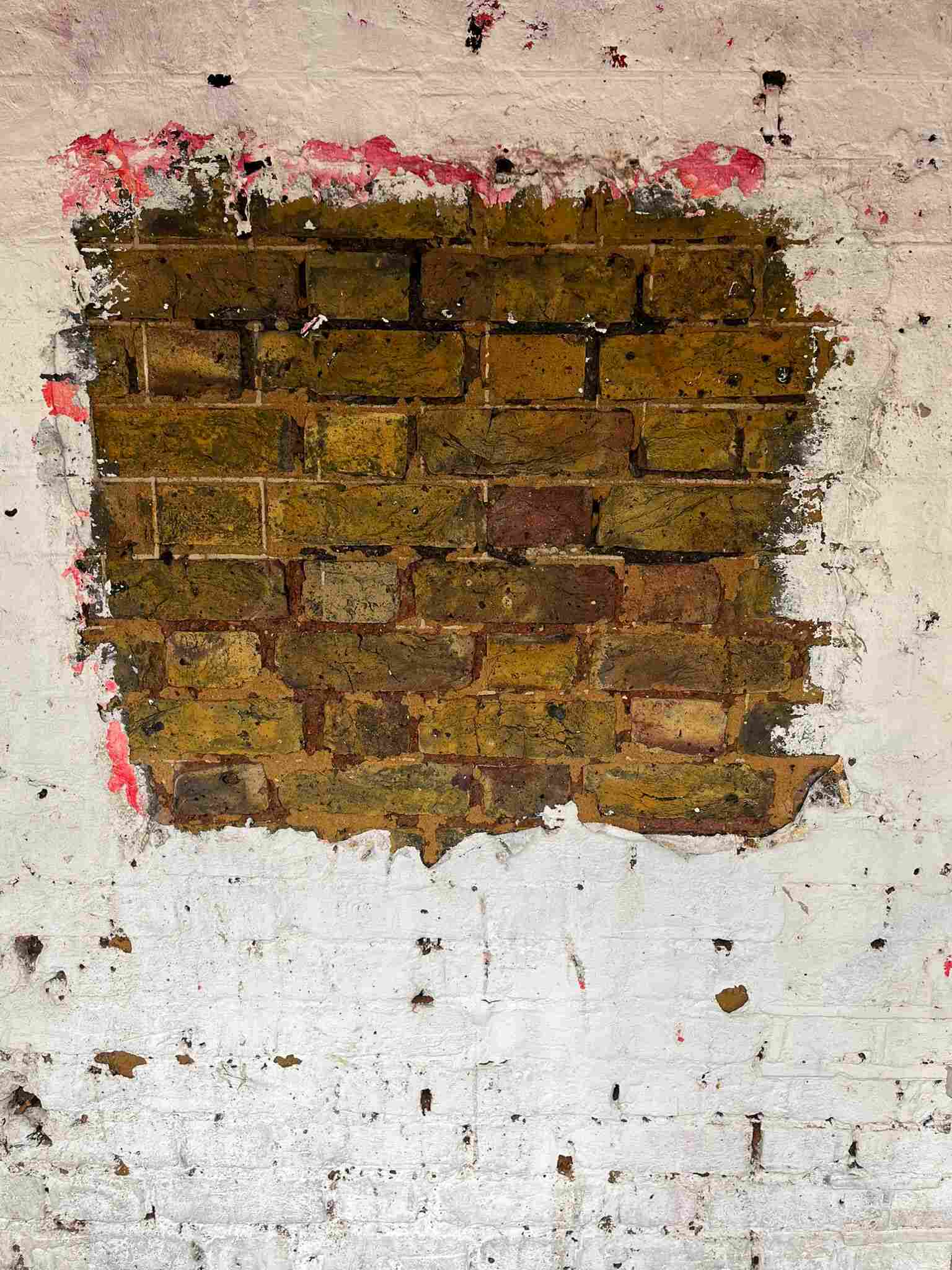
Paint can penetrate deeply into porous brick surfaces and may require:
- Specialist chemicals
- Steam cleaning
- Poultice systems
- Multiple applications
- Controlled abrasive systems
- Manual detailing
If your property has painted brickwork, the project should normally be assessed as brick paint removal rather than standard brick cleaning.
Internal link: Link “brick paint removal” to your Paint Removal London service page.
What Other Costs Might Be Involved?
Brick cleaning is sometimes only one part of a restoration project.
Additional work can include:
Scaffolding
Upper floors may require scaffolding or access equipment.
Repointing
Damaged or eroded mortar joints may need replacing.
Brick Replacement
Badly spalled, cracked or deteriorated bricks may need repair or replacement.
Paint Removal
Paint, coatings or previous treatments can substantially increase the work required.
Render Removal
Some properties have original brickwork hidden beneath render.
Removing render and restoring the brick underneath is a much larger project than standard cleaning.
Pebble Dash Removal
Removing pebble dash can expose damaged or stained original brickwork that subsequently requires cleaning and restoration.
Is Professional Brick Cleaning Worth It?
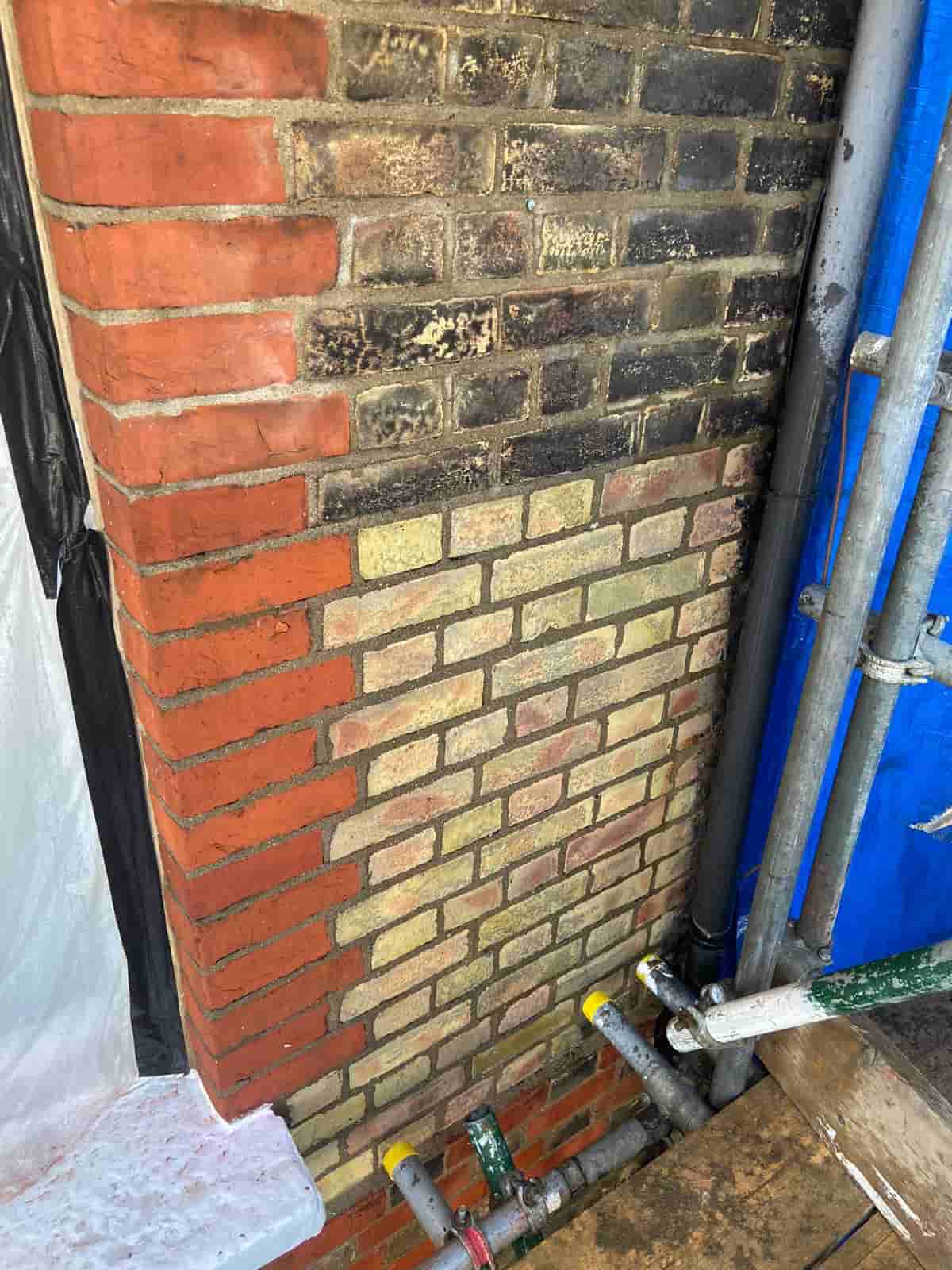
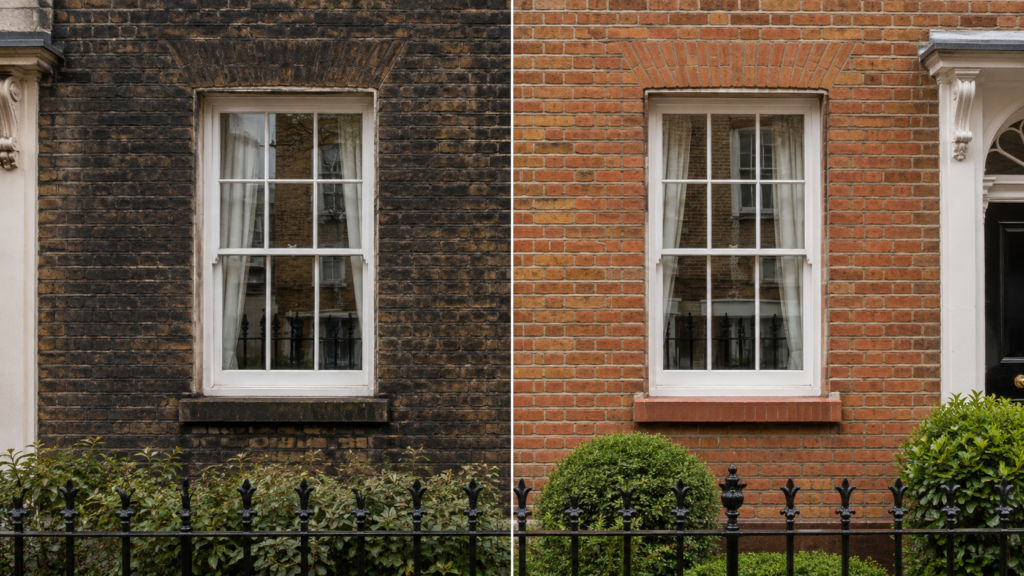
For suitable brickwork, professional cleaning can make a dramatic difference.
Potential benefits include:
- Restoring natural brick colour
- Removing years of pollution
- Improving kerb appeal
- Revealing original architectural detail
- Preparing brickwork for repair
- Removing biological growth
- Improving the appearance of period properties
- Supporting wider façade restoration
The biggest benefit is often seen on properties where decades of grime have hidden the original character of the masonry.
Does Brick Cleaning Increase Property Value?
It would be misleading to guarantee that brick cleaning will directly increase a property’s market value by a specific amount.
However, clean and well-maintained brickwork can significantly improve the exterior presentation of a property.
For buyers, visible problems such as:
- Blackened façades
- Crumbling mortar
- Moss
- Heavy staining
- Damaged bricks
can suggest that maintenance has been neglected.
Professional cleaning combined with necessary repairs can therefore improve kerb appeal and the overall impression of the building.
How Long Does Brick Cleaning Take?
Project duration depends on:
- Surface area
- Building height
- Amount of staining
- Cleaning method
- Brick condition
- Weather
- Access
- Additional repairs
A small accessible wall may be completed relatively quickly, while a full multi-storey façade requiring scaffolding, specialist cleaning and repointing will naturally take longer.
DW Brickwork Restoration can provide a clearer timeframe following inspection.
Can I Clean My Own Brick House?
DIY cleaning may appear cheaper, particularly for small accessible walls.
However, there are significant risks when cleaning older masonry.
Problems commonly arise from:
- Excessive water pressure
- Incorrect chemical products
- Acid damage
- Mortar erosion
- Uneven cleaning
- Brick-face damage
- Working at height
- Poor rinsing
- Damage to windows or adjacent surfaces
Historic or valuable brickwork is particularly difficult to replace once damaged.
Professional assessment is therefore strongly recommended for period London properties.
How Do Professionals Choose the Right Cleaning Method?
A specialist should consider:
Brick type
Soft historic bricks require different treatment from modern hard-fired masonry.
Mortar condition
Weak joints may restrict which cleaning systems can safely be used.
Type of contamination
Pollution, paint, moss and mineral staining require different treatments.
Building age
Older buildings often need more sympathetic methods.
Test areas
A discreet trial area can show how the brick responds before the entire façade is treated.
Desired finish
Professional cleaning should reveal the original character of the brick rather than making old masonry look unnaturally uniform.
Chemical-Free Brick Cleaning
Not every project requires strong chemicals.
Steam cleaning and other controlled methods can sometimes remove dirt, algae and pollution without aggressive chemical treatments.
Chemical-free or low-chemical approaches may be particularly attractive for:
- Historic buildings
- Residential properties
- Sensitive locations
- Environmentally conscious property owners
- Brickwork requiring gentle treatment
DW Brickwork Restoration already provides specialist cleaning options selected according to the masonry and contamination.
Brick Cleaning Across London
DW Brickwork Restoration provides professional brick cleaning throughout London.
Brick Cleaning North London
Including areas such as:
- Camden
- Islington
- Hampstead
- Highgate
- Finchley
- Barnet
Brick Cleaning South London
Including:
- Clapham
- Battersea
- Brixton
- Wandsworth
- Tooting
- Lewisham
- Croydon
- Dulwich
Brick Cleaning East London
Including:
- Hackney
- Stratford
- Shoreditch
- Leyton
- Bow
- Bethnal Green
- Walthamstow
Brick Cleaning West London
Including:
- Ealing
- Chiswick
- Hammersmith
- Notting Hill
- Kensington
- Paddington
- Shepherd’s Bush
Brick Cleaning Central London
Including areas around:
- Westminster
- Soho
- Marylebone
- Kensington
- Mayfair
- Central London
Why Choose DW Brickwork Restoration?
Cleaning London brickwork requires more than a powerful pressure washer.
DW Brickwork Restoration specialises in restoring brick façades while respecting the age, condition and character of the property.
Our approach includes:
- Property-specific assessment
- Professional brick-cleaning methods
- DOFF steam cleaning
- Controlled low-pressure cleaning
- Specialist stain treatment
- Period-property experience
- Brick repairs where required
- Repointing and restoration
- Paint and coating removal
- London-wide coverage
- Free, no-obligation quotations
Every project begins by determining what the brickwork actually needs.
Get a Brick Cleaning Quote in London
If your brickwork has become dark, stained or covered in years of pollution, professional cleaning can help reveal its original character again.
DW Brickwork Restoration provides specialist brick cleaning services throughout London, including North, South, East, West and Central London.
Restore the Natural Beauty of Your Brickwork
Speak with DW Brickwork Restoration about the condition of your property and the most appropriate cleaning method.
Call: 07400 421 172
Request a free, no-obligation brick cleaning quotation.