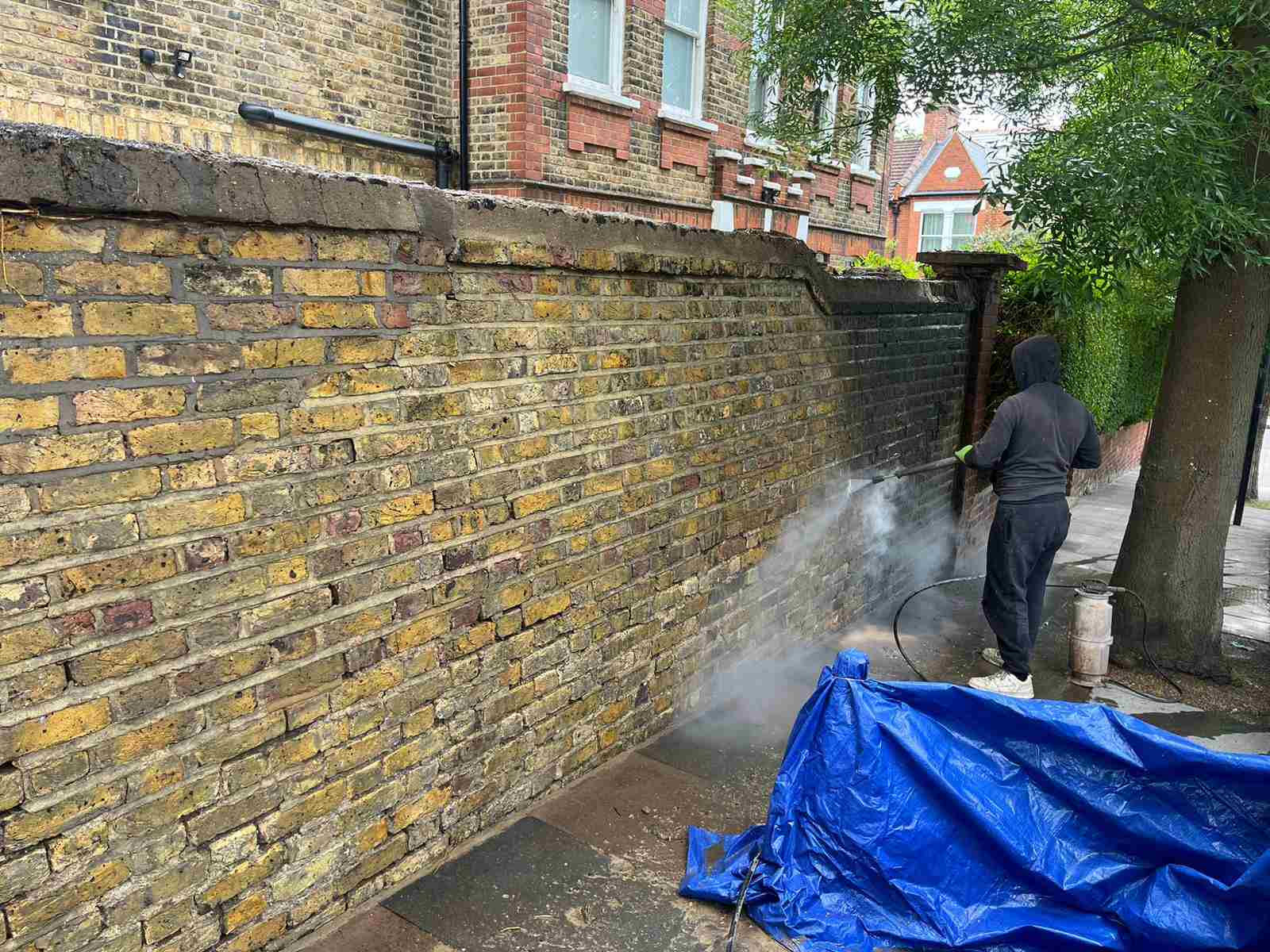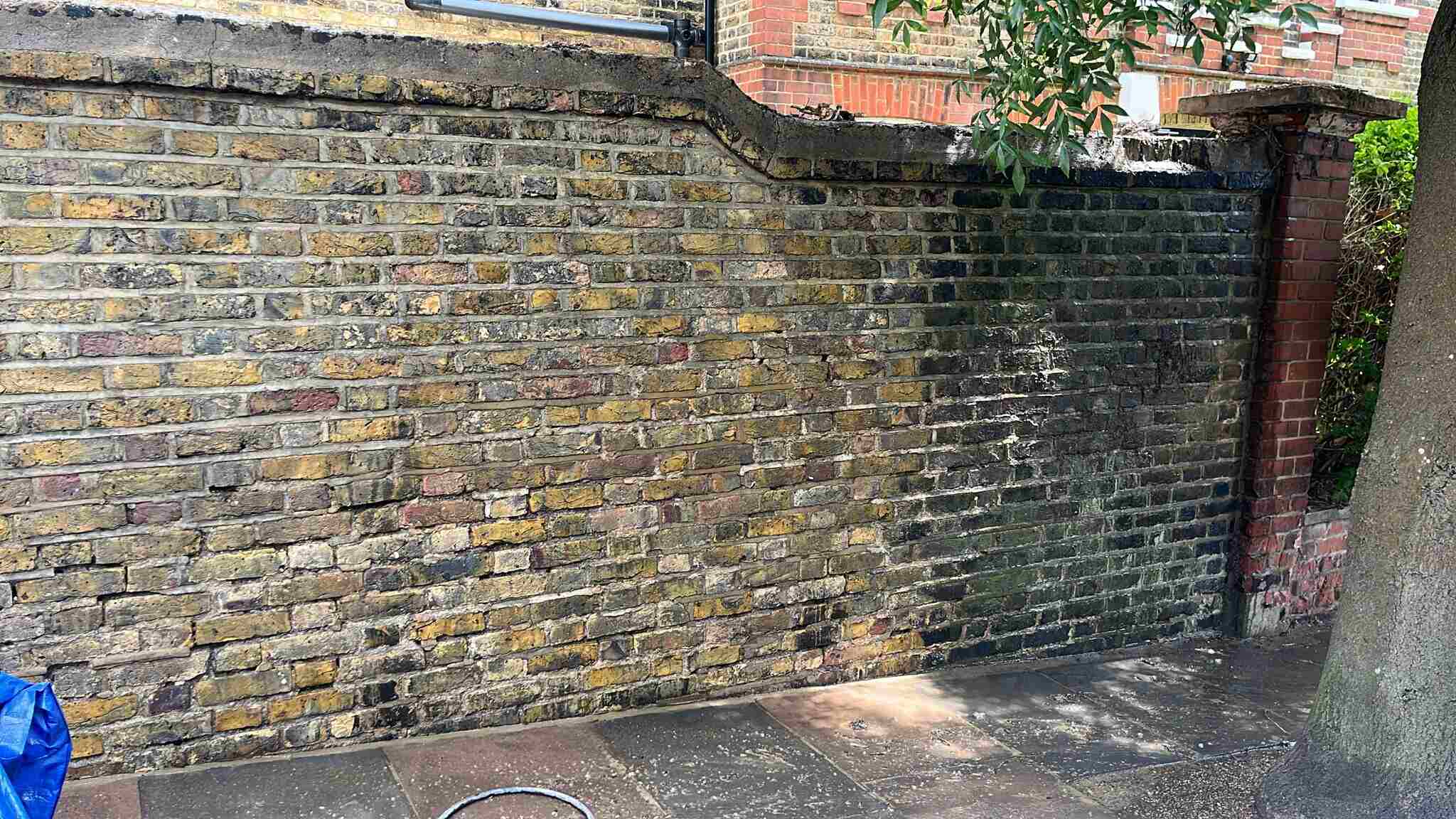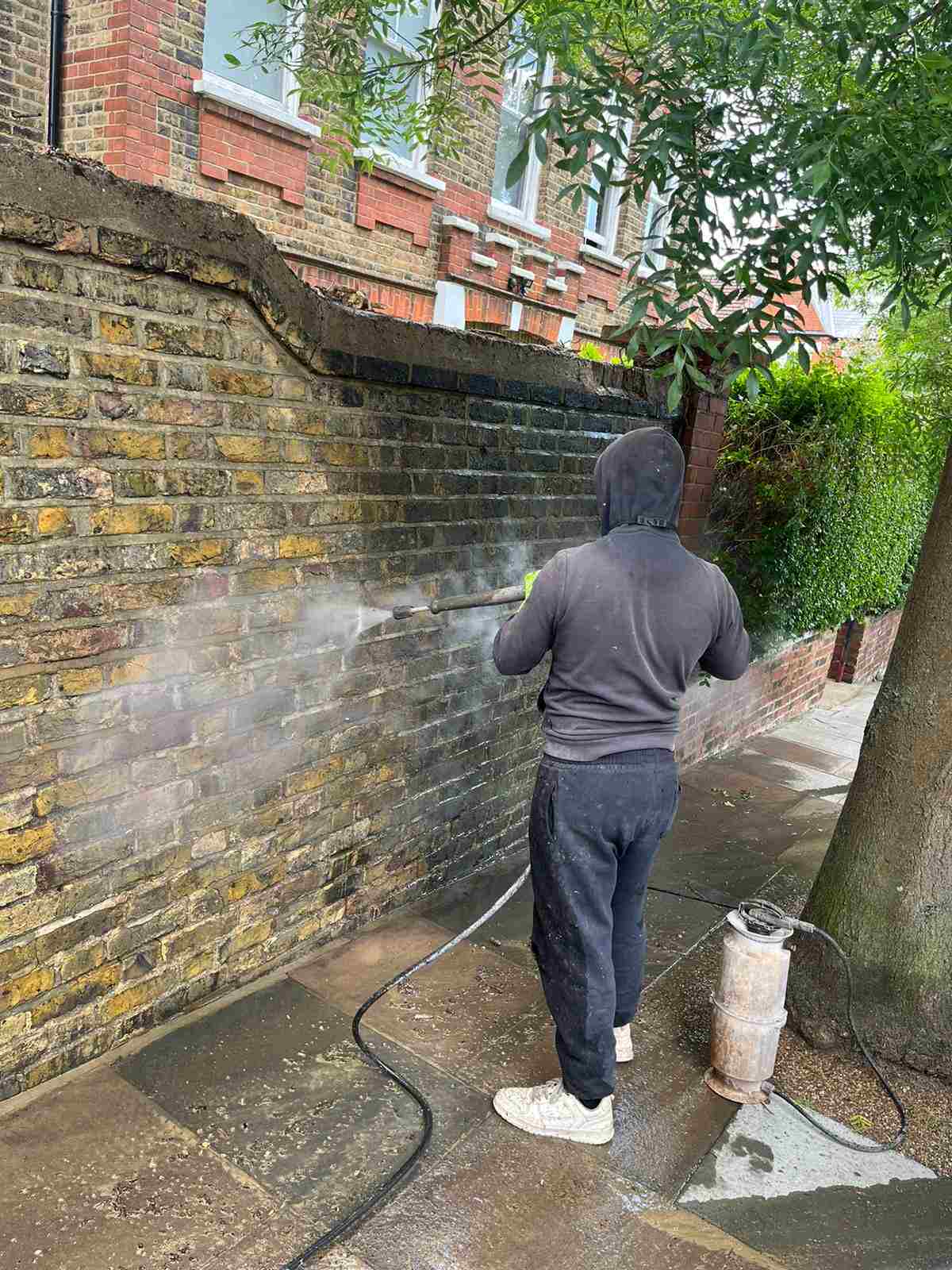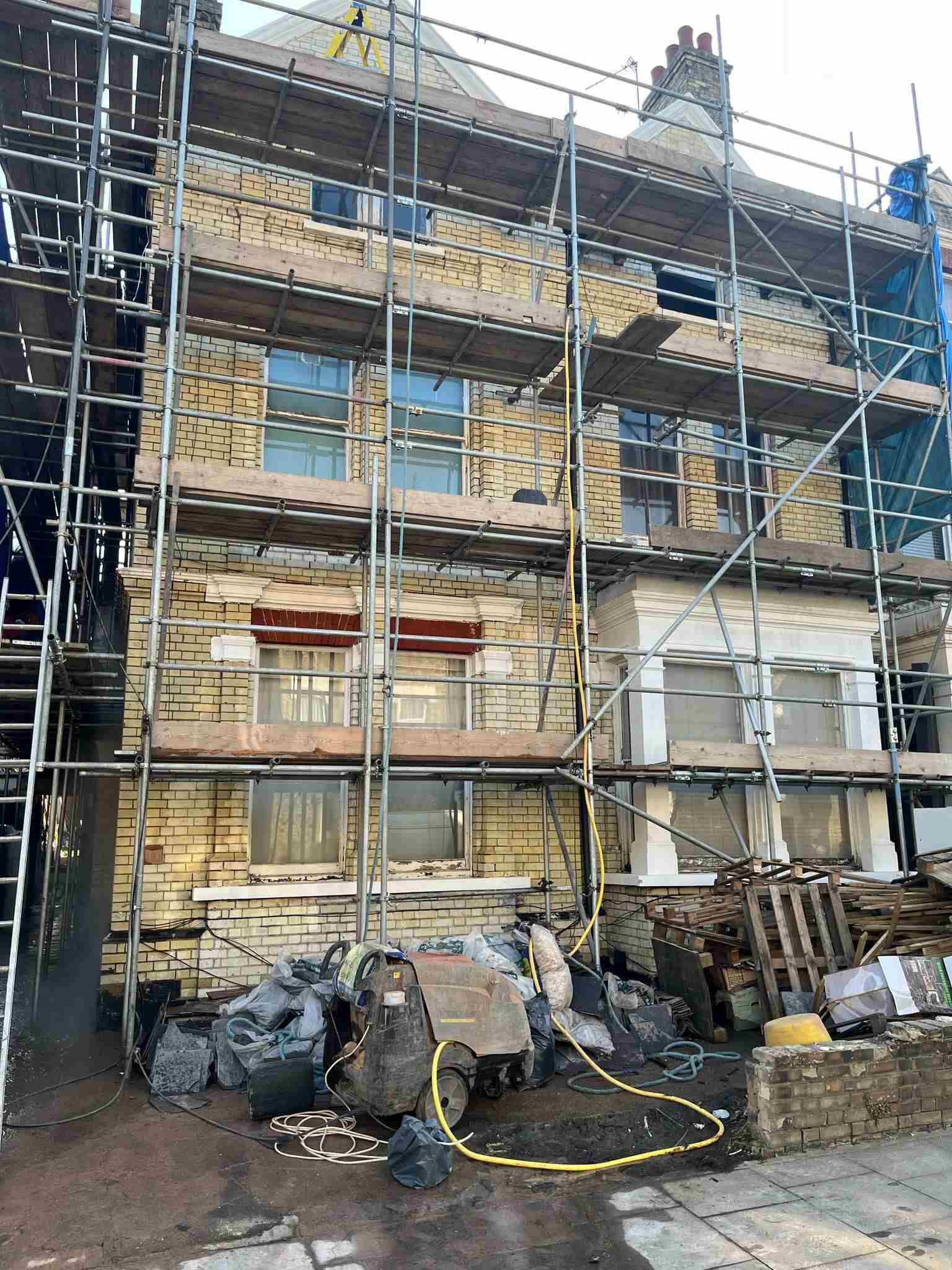
London’s buildings—many centuries old—require cleaning methods that are powerful enough to remove pollutants but gentle enough to avoid damaging historic materials.
This is where the TORC Cleaning System comes in.
TORC is one of the most effective and conservation-approved methods for removing:
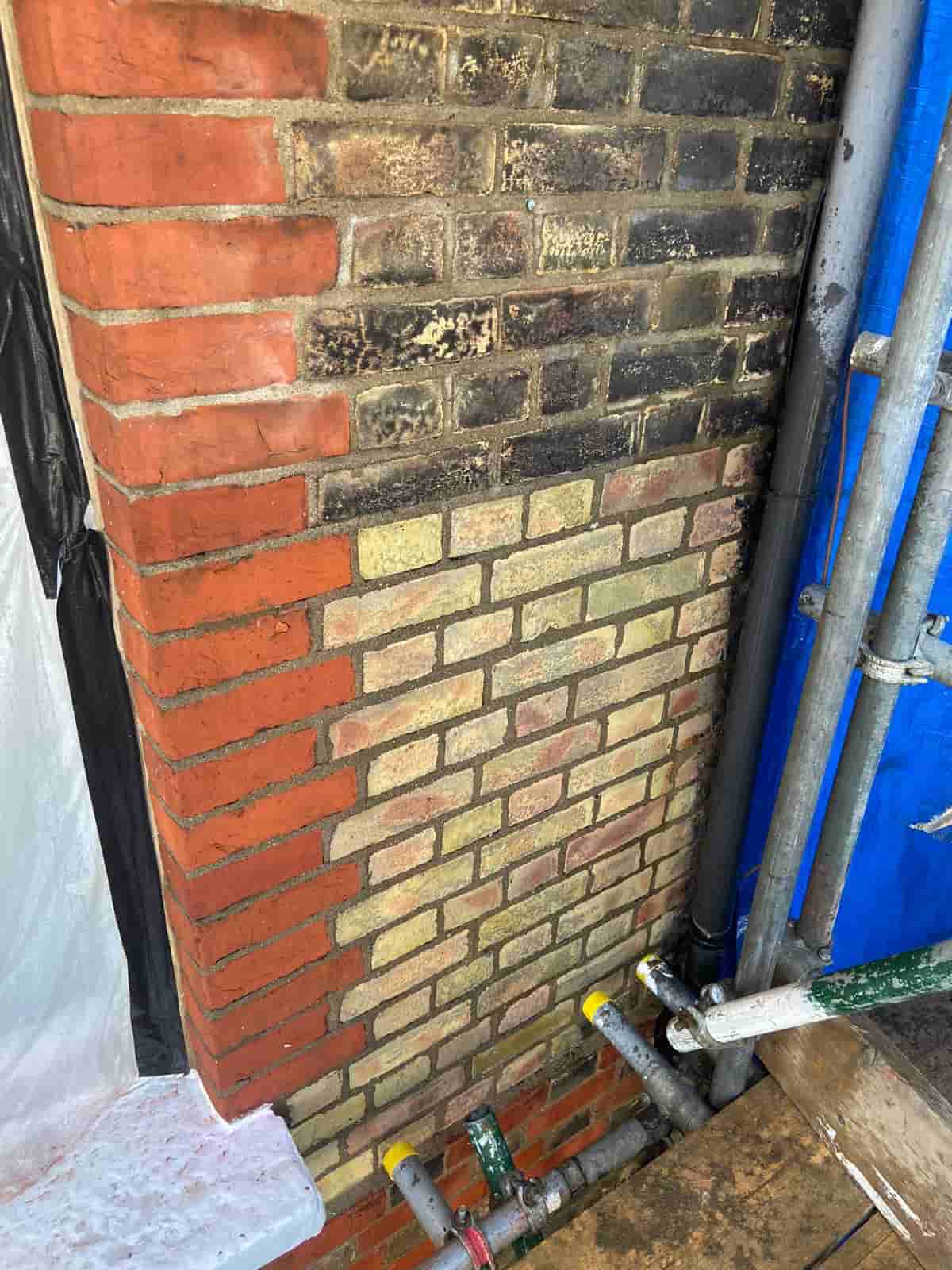
- Carbon staining
- Limewash
- Old paints and coatings
- Stubborn pollution buildup
- Graffiti residues
- Soot and fire damage
It is widely used on both heritage and modern buildings across London.
What Is TORC Cleaning?
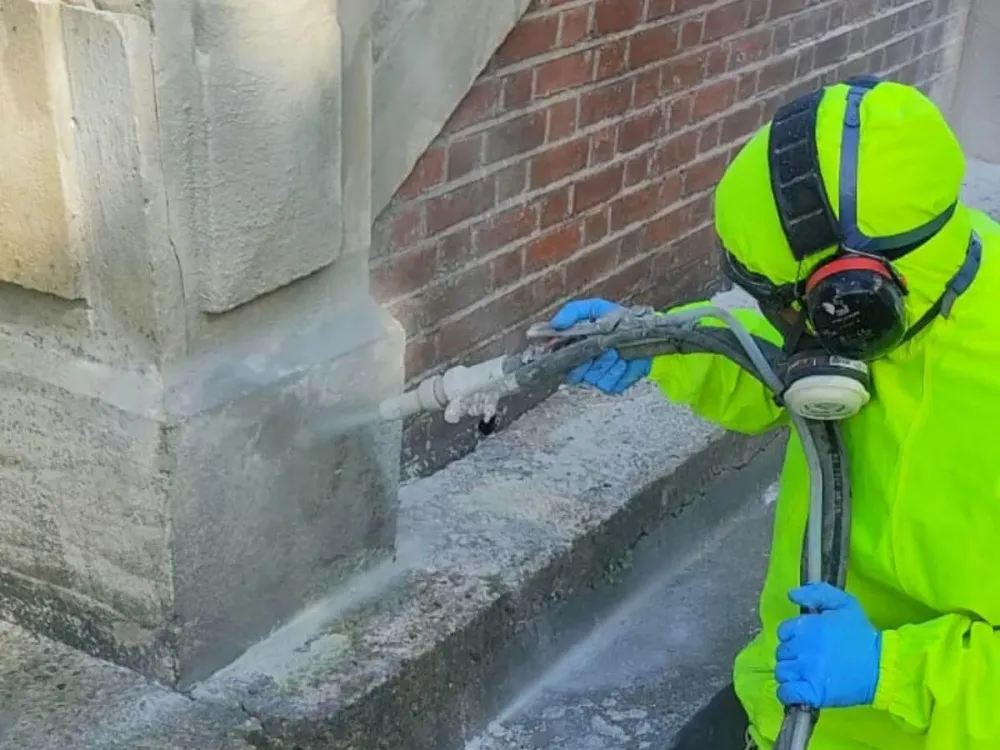
The TORC system is a swirling vortex cleaning method developed by Stonehealth.
It uses:
- Low air pressure
- A gentle stream of water
- A fine inert granulate (such as calcium carbonate)
to create a controlled cleaning swirl.
Unlike sandblasting or abrasive cleaning, TORC does not grind down or scratch brick surfaces.
Instead, it lifts and dislodges unwanted layers while keeping the underlying material safe.
How TORC Cleaning Works
The TORC nozzle creates a circular swirling motion that gently removes surface contaminants.
This method:
- Reduces impact on the brick or stone
- Avoids damaging detail or texture
- Ensures even cleaning across the surface
- Produces consistent, natural-looking results
TORC is ideal for surfaces that cannot withstand high pressure, harsh chemicals, or abrasive blasting.
What Can TORC Remove?
TORC is designed to tackle difficult contaminants, especially those found on historic façades.
✅ 1. Carbon & Traffic Pollution
Perfect for London’s older buildings exposed to decades of soot and pollutants.
✅ 2. Limewash & Historic Coatings
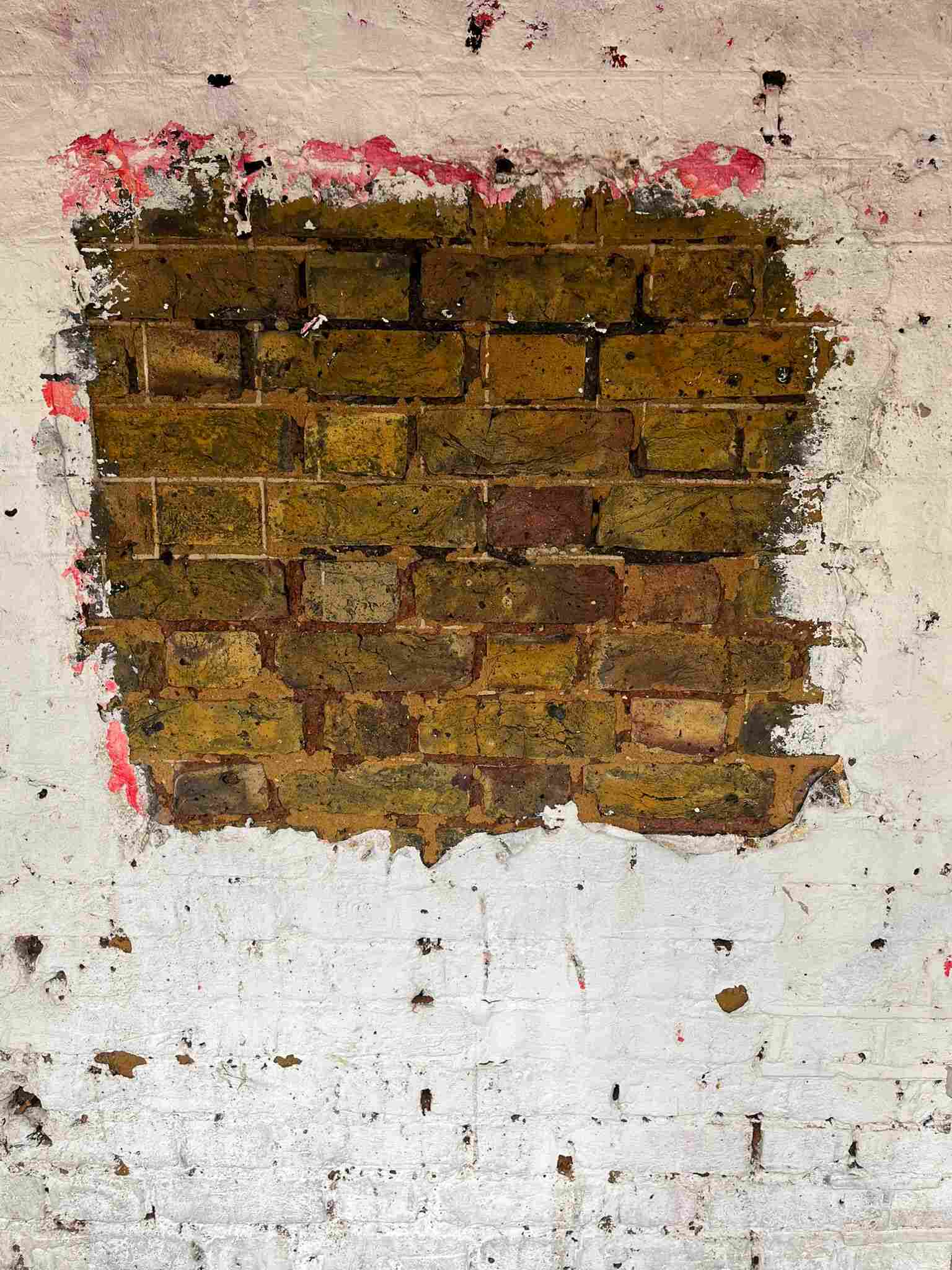
TORC gently removes lime-based coatings common on Victorian and Georgian structures.
✅ 3. Paint Residue & Stubborn Coatings
Useful for removing coatings that DOFF steam cannot fully dissolve.
✅ 4. Graffiti Ghosting
Eliminates leftover pigment staining after graffiti removal.
✅ 5. Rust, Smoke & Fire Damage
TORC cleans without spreading residue or damaging the substrate.
✅ 6. Algae & Mineral Deposits
Highly effective on stone and brick suffering from long-term weathering.
Why TORC Is Approved for Heritage Buildings
Many boroughs—such as Westminster, Camden, Islington, and Kensington—contain protected listed buildings.
TORC is approved because:
- It is non-abrasive
- It does not damage brick faces or mortar
- It is safe for lime-based materials
- It respects historical fabric
- It offers precise, controlled cleaning
English Heritage and conservation officers frequently recommend TORC for sensitive cleaning projects.
TORC vs DOFF: What’s the Difference?
Both are excellent restoration tools, but they achieve different goals.
✅ DOFF Steam Cleaning
- Uses superheated steam
- Best for biological growth, light staining & organic material
✅ TORC Cleaning
- Uses a swirling granulate
- Best for heavy carbon, historic coatings & stubborn residues
Most full restoration projects use both systems for a complete finish.
When Should You Use TORC Cleaning?
TORC is ideal for:
- Heavily carbon-stained façades
- Soot and fire-damaged walls
- Properties coated with limewash
- Historic buildings requiring gentle cleaning
- Brick or stone with stubborn paint layers
- Removing buildup that steam cannot lift
It is especially popular for Georgian, Victorian, and Edwardian properties.
Benefits of TORC Cleaning
- ✅ Safe for historic materials
- ✅ No harsh chemicals
- ✅ Non-damaging to brickwork
- ✅ Removes stubborn layers effectively
- ✅ Conservation-approved
- ✅ Great for preparing surfaces for restoration
Final Thoughts
TORC Cleaning is a powerful yet delicate restoration technique, ideal for London buildings suffering from years of pollution, coatings, or stubborn residues.
When used alongside DOFF, it forms a complete cleaning solution that protects and restores brickwork for generations to come.