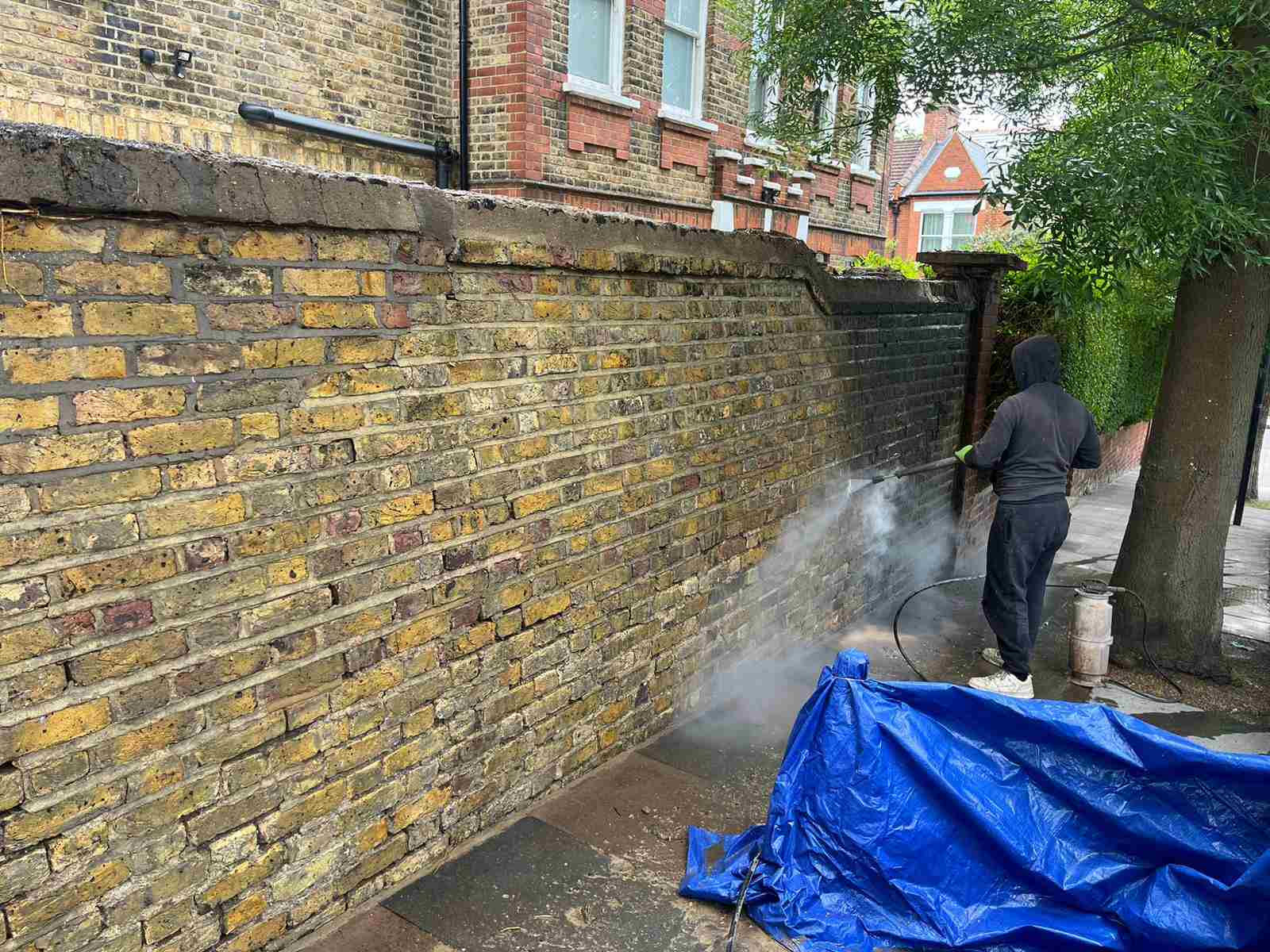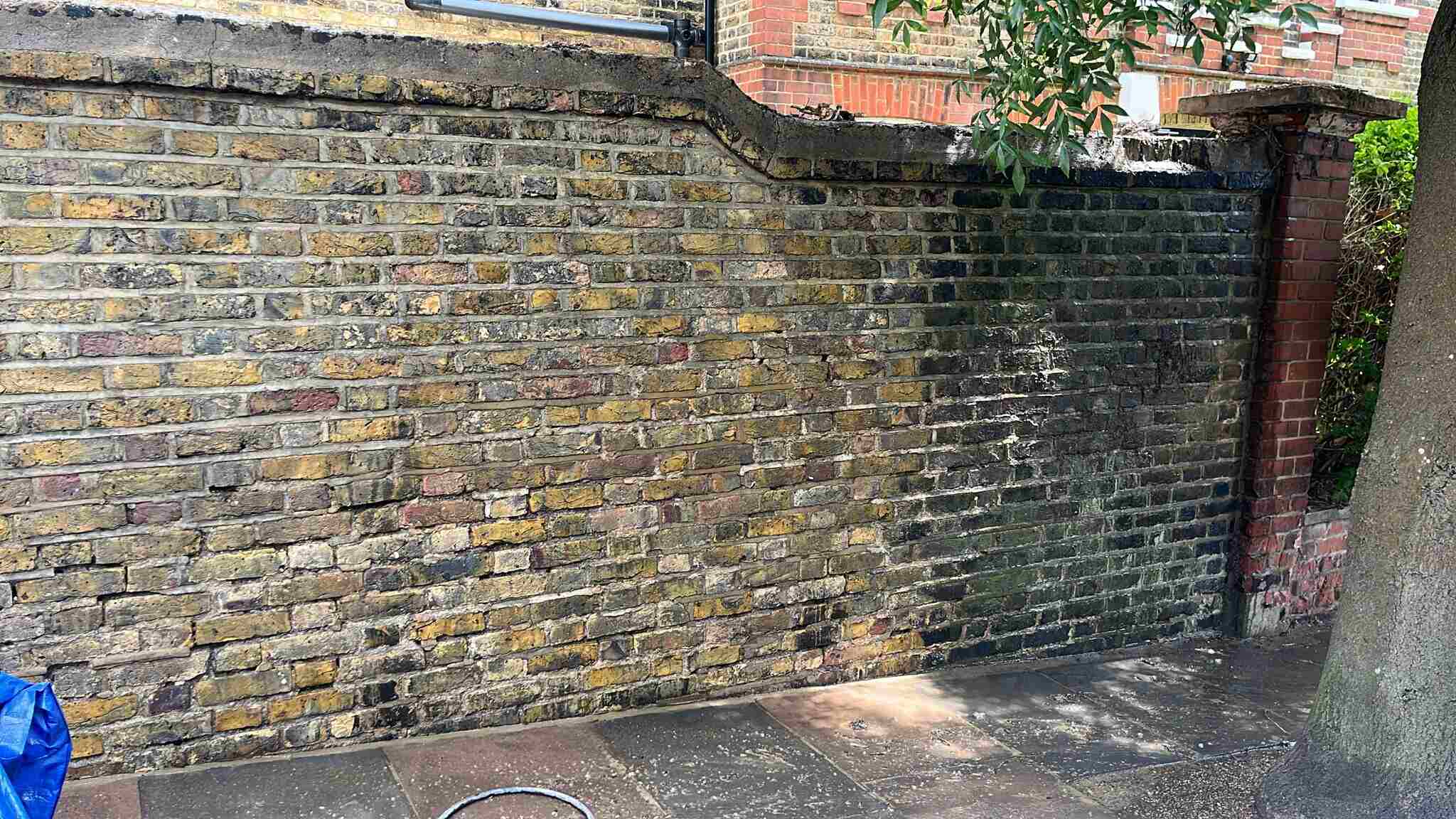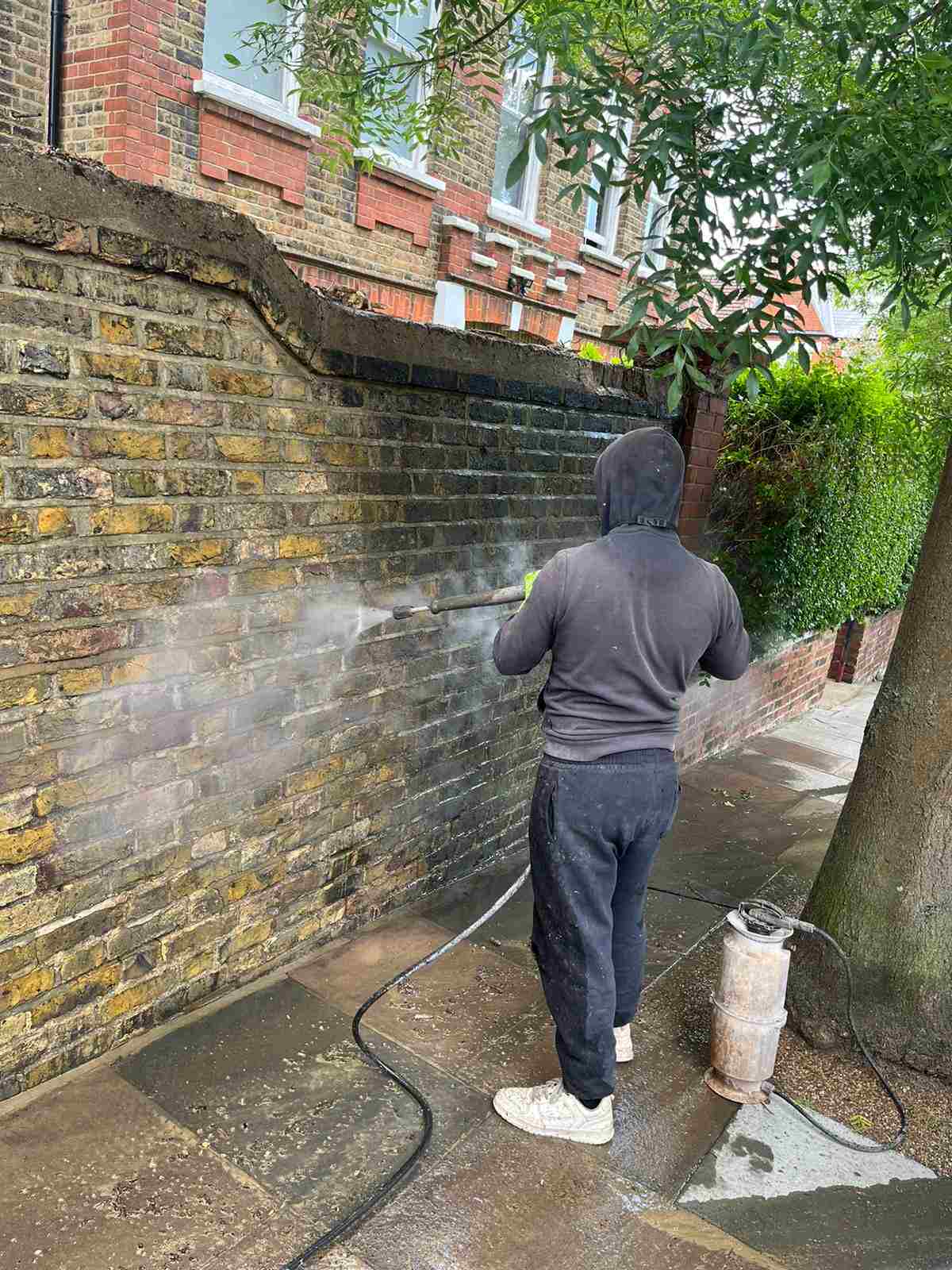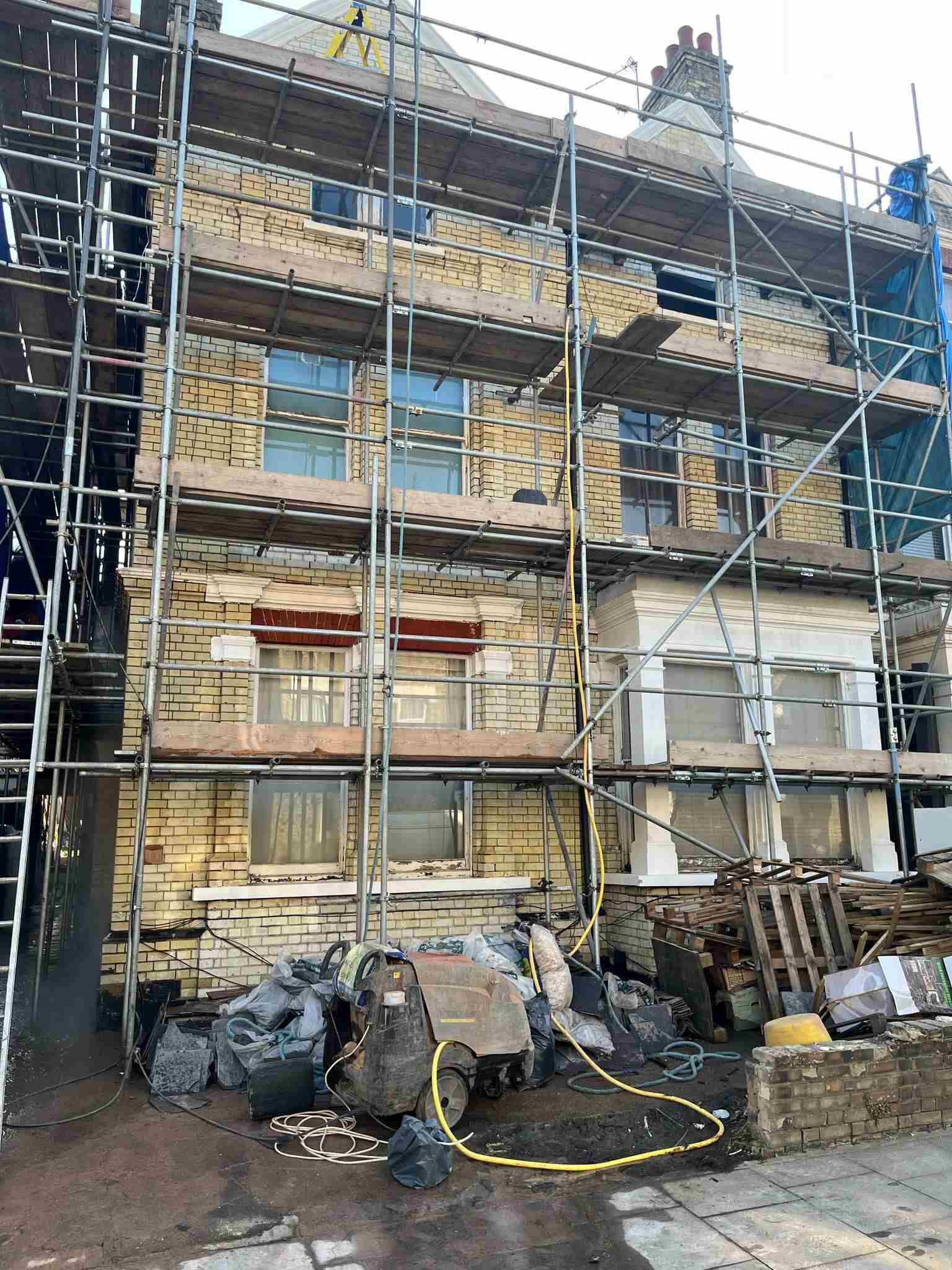
Mortar joints are one of the most important—and most overlooked—parts of a brick wall.
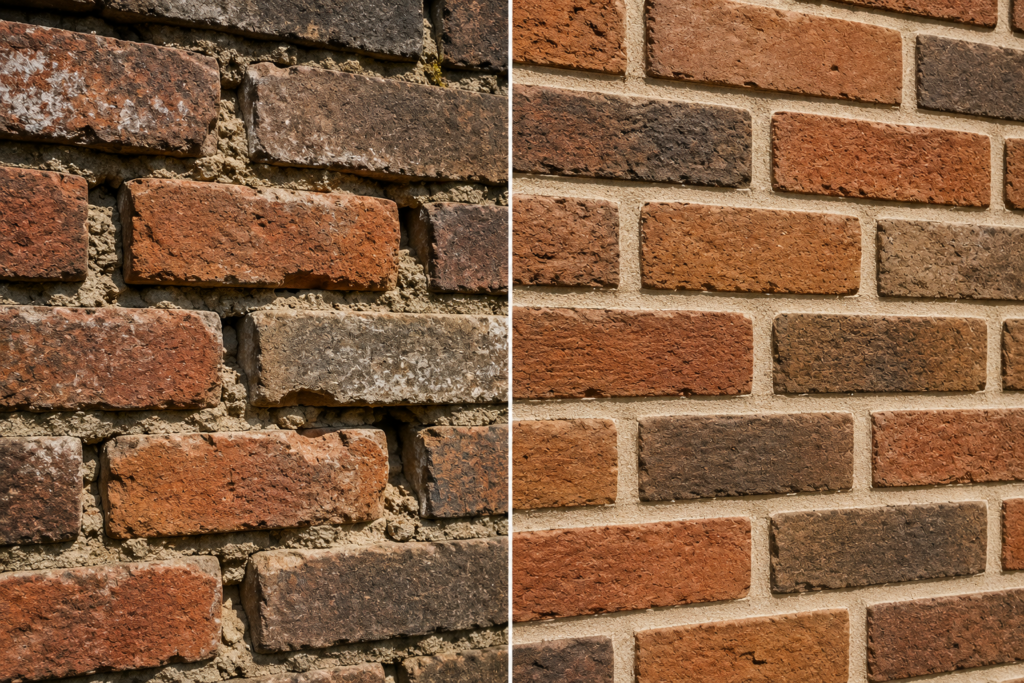
While bricks may last for generations, the mortar between them is designed to weather gradually. When it becomes badly eroded, cracked or loose, the wall may become increasingly vulnerable to rain penetration and further deterioration.
So how can you tell whether your house actually needs brick repointing?
The most common warning signs include crumbling mortar, deep or missing joints, cracks, loose material, damp patches, spalling bricks and previous hard cement repairs.
However, not every old or weathered mortar joint needs replacing.
For historic properties especially, unnecessarily removing sound original mortar can damage brick edges and destroy valuable historic material. Historic England notes that comprehensive repointing is rarely necessary and that sound historic mortar should generally be left undisturbed.
At DW Brickwork Restoration, brickwork is assessed before repointing begins so that repairs can focus on the areas that genuinely need attention.
Internal link: Link “professional repointing in London” to the main Repointing Services London page.
What Is Brick Repointing?
Brick repointing is the process of removing deteriorated mortar from the exposed face of masonry joints and replacing it with new, compatible mortar.
The purpose is to restore the joint while helping:
- Protect the wall from weather
- Maintain the stability of the masonry
- Manage moisture appropriately
- Preserve brick edges
- Improve appearance
- Extend the useful life of the wall
Repointing is particularly important because mortar is often intended to act as the more sacrificial element of traditional masonry.
In other words, it is preferable for the mortar to weather gradually rather than the bricks themselves.
SPAB explains that lime mortar on older buildings typically erodes preferentially, helping protect the surrounding masonry from frost and salt damage.
Does Old Mortar Automatically Need Repointing?
No.
This is one of the most important points for homeowners to understand.
Mortar can look:
- Old
- Soft
- Uneven
- Weathered
- Discoloured
without necessarily having failed.
SPAB advises that repointing may be premature until mortar has weathered back significantly or become very loose, while Historic England similarly notes that complete repointing is rarely necessary.
Good restoration does not mean replacing every old mortar joint simply to make a façade look new.
The correct approach is to identify failing areas and preserve sound historic material wherever practical.
10 Signs Your Brickwork May Need Repointing
1. Mortar Is Crumbling or Falling Out
One of the clearest warning signs is mortar that breaks away easily.
You may notice small pieces of mortar:
- On window ledges
- At the base of walls
- On paths
- Around garden walls
If the mortar turns to powder when lightly touched, it may have lost much of its integrity.
Mortar deterioration can occur because of:
- Age
- Freeze-thaw cycles
- Continuous moisture
- Salt crystallisation
- Poor previous repairs
- Incompatible mortar
- Exposure to London weather
A specialist should determine whether the problem is localised or widespread.
2. Mortar Joints Have Become Deeply Recessed
Mortar naturally erodes over time.
A small amount of weathering does not necessarily mean immediate repairs are required.
However, if joints have recessed deeply behind the face of the brick, they may no longer provide adequate weather protection.
Historic England specifically recommends checking exterior walls for deep erosion or missing pointing.
Deep joints can also create ledges where water collects.
Pay particular attention to elevations that receive:
- Driving rain
- Strong wind
- Limited sunlight
- Repeated freezing conditions
3. Mortar Is Missing Between Bricks
Visible gaps are a stronger indication that repair may be necessary.
Missing mortar can allow more water into the wall and leave surrounding bricks less well supported.
Look closely around:
- Window openings
- Doorways
- Chimneys
- Parapets
- Exposed corners
- Roof lines
- Boundary walls
These areas often experience more severe weathering.
4. Cracks Are Appearing Through Mortar Joints
Small cracks can develop for several reasons.
Some may simply indicate local mortar failure.
Others can be associated with:
- Building movement
- Thermal expansion
- Failed lintels
- Subsidence
- Corroding wall ties
- Structural alterations
Not every crack should simply be filled with mortar.
Historic England advises seeking structural advice where brick walls are cracking, bulging or leaning, particularly where masonry units themselves are fracturing.
When Should a Crack Be Investigated?
Professional assessment is sensible when cracks are:
- Widening
- Long
- Stepped through brick joints
- Reappearing after repair
- Associated with movement
- Passing through bricks
- Accompanied by bulging
Repointing can repair failed mortar, but it does not solve an underlying structural problem.
5. Damp Patches Are Appearing Inside or Outside
Failed mortar joints can contribute to rain penetration.
You might notice:
- Damp internal patches
- Dark external brickwork
- White salt deposits
- Algae
- Moss
- Persistent staining
However, damp should never automatically be blamed on pointing.
Other common causes include:
- Leaking gutters
- Broken downpipes
- Roof defects
- Failed flashing
- Plumbing leaks
- High ground levels
- Condensation
Historic England recommends addressing anything that is causing or worsening damp before carrying out masonry repairs.
A leaking gutter may repeatedly saturate a wall.
Simply repointing the mortar without fixing the gutter would treat the symptom rather than the cause.
6. Brick Faces Are Flaking or Spalling
Spalling occurs when the outer face of a brick begins to break away.
Signs include:
- Flaking surfaces
- Pieces falling off
- Rough exposed interiors
- Hollow areas
- Crumbling brick faces
This can result from moisture entering the masonry and freezing, particularly when water cannot evaporate effectively.
Historic England identifies freeze-thaw action and inappropriate mortar among the causes of deterioration in older brick walls.
Spalling can also indicate that the mortar around the brick is too hard.
In traditional masonry, the mortar should usually weather before the brick.
If the bricks are deteriorating while hard mortar remains almost untouched, the pointing deserves closer inspection.
7. Hard Cement Mortar Is Standing Proud of Old Bricks
This is particularly important on Victorian, Georgian and other period properties.
A common previous repair involved replacing softer lime mortar with very hard cement-rich mortar.
You may notice:
- Hard grey joints
- Mortar projecting beyond bricks
- Very smooth mortar
- Cracked cement joints
- Brick faces deteriorating beside intact mortar
SPAB warns that dense cement pointing on old masonry can cause the brick or stone to become the more vulnerable part of the wall, increasing frost and salt-related deterioration.
That does not mean all cement mortar must automatically be removed.
Hard mortar can sometimes be difficult to cut out without damaging historic bricks.
A trial area should be used to determine whether safe removal is possible.
8. Mortar Looks Different Across the Façade
Patchy mortar can reveal a history of repairs.
One part of a building may contain:
- Original lime mortar
- Modern cement
- Previous repointing
- Superficial patching
- Different joint finishes
Different mortar is not automatically defective.
However, changes may be worth investigating where one area is:
- Cracking
- Separating
- Causing brick damage
- Significantly harder than the original material
A good restoration contractor should assess the complete wall rather than simply matching the colour of the latest repair.
9. Bricks Are Becoming Loose
Loose masonry should not be ignored.
If individual bricks are moving, mortar may have deteriorated significantly.
Possible causes include:
- Severe joint erosion
- Long-term saturation
- Structural movement
- Failed repairs
- Frost damage
Local rebuilding or brick replacement may sometimes be required alongside repointing.
A professional inspection should establish the underlying cause.
10. The Wall Has Not Been Inspected for Decades
Mortar deterioration is gradual.
Because it happens slowly, homeowners often become accustomed to the appearance of a wall without noticing how much material has disappeared.
Period properties in London may have mortar that has survived for many decades.
A simple periodic inspection can identify small problems before they become expensive restoration projects.
Pay particular attention to:
- Chimneys
- Parapets
- Boundary walls
- Exposed elevations
- Areas below gutters
- Window surrounds
- Roof junctions
These are often the first areas to deteriorate.
How Deep Should Mortar Be Before Repointing?
There is no simple universal measurement that applies to every wall.
However, SPAB provides a useful conservation principle: repointing may be appropriate once mortar has weathered back to approximately the width of the joint or is very loose.
This is more useful than deciding based purely on appearance.
For example:
A slightly soft but substantially intact lime joint may still be functioning.
A deeply eroded joint with gaps and loose material may require repair.
Localised Repointing vs Full Repointing
One of the biggest mistakes in brick restoration is assuming the entire façade needs repointing.
Localised Repointing
May be appropriate where deterioration is confined to:
- Chimneys
- Parapets
- Window surrounds
- Small damp-affected areas
- Weather-exposed sections
- Previous repairs
Extensive Repointing
May be justified where:
- Most joints are deeply eroded
- Mortar is loose across the façade
- Significant previous pointing has failed
- Incompatible repairs are contributing to masonry damage
Historic England specifically states that whole-building repointing is rarely necessary and that exposed areas or locations affected by defects such as leaking rainwater goods commonly require more attention than sheltered masonry.
What Happens If You Don’t Repoint Failing Brickwork?
If genuinely failed mortar is ignored, deterioration can continue.
Potential consequences include:
- Increased rain penetration
- Further joint erosion
- Loose bricks
- Freeze-thaw damage
- Greater repair costs
- Damage to brick edges
The severity depends on the wall and the underlying cause.
Early localised maintenance is generally preferable to waiting until large sections of masonry require restoration.
Can Repointing Stop Water Coming Through a Wall?
It can help where deteriorated joints are the route of rain penetration.
But repointing is not a universal waterproofing solution.
A proper inspection should also examine:
- Gutters
- Roofs
- Flashings
- Window details
- Cracks
- Ground levels
- Render
- Drainage
Brick walls should not simply be coated or repointed without understanding where water is coming from.
Does Repointing Fix Structural Cracks?
No.
Repointing can replace failed mortar after the cause of a crack has been identified and resolved.
It cannot correct structural movement by itself.
If a wall is:
- Bulging
- Leaning
- Moving
- Severely cracked
seek appropriate structural advice.
Mortar repair should follow diagnosis, not replace it.
How Often Does Brickwork Need Repointing?
There is no fixed schedule.
Well-executed mortar can last for many decades.
Its lifespan depends on:
- Mortar type
- Original workmanship
- Building exposure
- Moisture
- Brick hardness
- Maintenance
- Pollution
- Previous repairs
Some sheltered historic joints can remain serviceable for a remarkably long time.
Other areas—particularly chimneys and exposed façades—may deteriorate more quickly.
Inspection is more useful than a fixed “repoint every X years” rule.
When Is the Best Time to Repoint Brickwork?
Masonry work depends heavily on weather.
Fresh mortar needs protection from:
- Frost
- Heavy rain
- Strong sunlight
- Excessive wind
- Rapid drying
SPAB advises avoiding unfavourable weather and ensuring new mortar is protected during curing.
This is especially important with traditional lime mortar, which requires appropriate curing conditions.
How Is Professional Brick Repointing Done?
A typical process includes:
1. Inspection
Identify where joints have actually failed.
2. Mortar Assessment
Determine the existing mortar type and appropriate replacement.
3. Raking Out
Remove defective mortar carefully without damaging brick edges.
4. Cleaning Joints
Remove dust and loose debris.
5. Preparing Masonry
Dry brickwork may need controlled dampening.
6. Applying New Mortar
Compatible mortar is packed into the prepared joints.
7. Finishing
The joint profile is matched to the building.
8. Curing and Protection
Fresh mortar is protected from inappropriate weather conditions.
Why Mortar Matching Matters
Mortar is not simply grey filler.
A suitable specification should consider:
- Strength
- Permeability
- Flexibility
- Aggregate
- Colour
- Texture
- Joint finish
This is particularly important on Victorian and Georgian London houses.
The wrong mortar may look inappropriate and can affect the long-term performance of the masonry.
How Much Does Brick Repointing Cost?
The cost depends on:
- Area
- Accessibility
- Scaffolding
- Mortar type
- Joint depth
- Brick repairs
- Building height
- Existing mortar
For a complete breakdown of current pricing factors, link readers to:
This keeps the cost cluster concentrated on the existing cost article instead of creating keyword cannibalisation.
Brick Repointing on Victorian London Properties
Period London brickwork often requires more careful assessment than modern masonry.
Victorian properties can contain:
- London stock bricks
- Lime mortar
- Decorative pointing
- Multiple generations of repairs
- Hard cement patches
- Weathered brick faces
The aim should be to retain sound original material and repair only what is necessary.
Historic England emphasises that mortar joints contribute significantly to both the appearance and durability of traditional brickwork.
Brick Repointing Across London
DW Brickwork Restoration provides professional pointing and repointing throughout:
- Central London
- North London
- South London
- East London
- West London
Recommended Internal Links
Link naturally to:
- Repointing Services London
- Pointing Services London
- Brick Restoration London
- Central London Brick Pointing & Repointing
- North London Brick Pointing & Repointing
- South London Brick Pointing & Repointing
- East London Brick Pointing & Repointing
- West London Brick Pointing & Repointing
Rather than placing all five location links in one paragraph, use them contextually throughout the article or in a service-area section.
Why Choose DW Brickwork Restoration?
Repointing should begin with diagnosis—not with removing every mortar joint on the building.
DW Brickwork Restoration works with traditional and modern London properties and provides:
- Brick repointing
- Lime mortar pointing
- Traditional pointing
- Brick repairs
- Brick restoration
- Brick cleaning
- Paint removal
- Render removal
- Pebble dash removal
Our approach focuses on identifying deteriorated areas, choosing compatible materials and preserving sound brickwork wherever practical.
Get Your Brickwork Checked
If your mortar is:
- Crumbling
- Deeply recessed
- Missing
- Cracked
- Allowing bricks to loosen
it may be time for professional assessment.
The earlier genuine mortar failure is identified, the easier it may be to carry out targeted repairs before wider deterioration occurs.
Need Repointing in London?
Contact DW Brickwork Restoration for professional brickwork inspection, pointing and repointing throughout London.
Call: 07400 421 172
Email: info@dwbrickworkrestoration.co.uk
Request a free, no-obligation assessment and quotation.